
How to Monetize First-Party Data with an Ad Server
Key Takeaways
- First-party data is only valuable when it's activated and monetized
- Most teams under-monetize data by relying exclusively on programmatic advertising
- Audience segmentation and direct sales unlock significantly more value than auctions alone
- Retail media and sponsored placements create new revenue streams powered by first-party data
- Ad servers provide the targeting, packaging, pricing, delivery, and reporting controls needed to monetize audience data effectively
- Structured first-party data strategies can unlock 20–50% additional revenue
The Problem Most Teams Don't Realize
Everyone talks about first-party data.
Very few teams actually monetize it.
At best, publishers and apps:
- collect user data
- pass it into programmatic platforms
- use it for basic audience targeting
- see small CPM improvements
Then they ask:
"Is this all our data is worth?"
Usually, the answer is no.
The most effective way to monetize first-party data with an ad server is to turn audience insights into sellable advertising products.
By activating audience segments, packaging them into premium inventory, and selling them through direct deals, publishers can generate significantly more revenue than relying on programmatic advertising alone.
An ad server provides the targeting, delivery, pricing, and reporting controls needed to make that possible.
The Uncomfortable Truth
First-party data doesn't generate revenue on its own.
It only becomes valuable when you can:
- Activate it
- Package it
- Price it
- Sell it
- Measure it
Without those steps, it's just a signal; not a product.
Many organizations invest heavily in collecting data but never build a monetization strategy around it.
As a result, valuable audience insights remain trapped inside advertising platforms instead of becoming revenue-generating assets.
Why Most First-Party Data Strategies Underperform
The typical strategy looks like this:
- Collect user data
- Send it into programmatic platforms
- Let auctions determine value
The problem?
You're still operating inside someone else's ecosystem.
Your data may improve campaign performance, but you have very little control over how that value is captured.
What That Means in Practice
- Limited control over pricing
- Little ability to create premium inventory
- No ownership of advertiser relationships
- Minimal differentiation from competitors
- Limited visibility into audience value
The result:
Your data improves performance but doesn't transform revenue.
The Missing Step: Data Activation
Many teams focus on collecting first-party data.
Far fewer focus on activating it.
Before data can generate revenue, it must be connected to real monetization workflows.
Activation includes:
- Audience segmentation
- Campaign targeting
- Personalization
- Inventory creation
- Revenue measurement
Only activated data becomes something advertisers are willing to pay more for.
This is where many first-party data strategies stall.
The data exists. But it never becomes a product.
Why First-Party Data Matters More Than Ever
The value of first-party data is increasing rapidly.
Several industry shifts are driving that change:
- Third-party cookies continue to disappear
- Privacy regulations continue to expand
- Advertisers want deterministic audience signals
- Retail media networks are growing quickly
- Brands need better targeting in privacy-conscious environments
Unlike third-party data, first-party data comes directly from your relationship with users.
That makes it:
- More reliable
- More privacy-friendly
- More valuable to advertisers
Organizations that build strong first-party data assets today are positioning themselves for long-term revenue growth.
Where the Real Value Comes From
First-party data becomes powerful when it creates products advertisers can buy.
1. Premium Audience Segments
Examples include:
- High-intent shoppers
- Repeat purchasers
- Frequent visitors
- Category enthusiasts
- Subscription prospects
These audiences often command significantly higher CPMs than untargeted inventory.
2. Sponsored Placements
Examples include:
- Featured listings
- Promoted products
- Sponsored content
- Native advertising integrations
Audience targeting makes these placements substantially more valuable.
3. Retail Media Products
Retail media is one of the fastest-growing advertising categories.
First-party data powers:
- On-site advertising
- Sponsored products
- In-app promotions
- Audience-based campaigns
- Vendor advertising programs
These opportunities create entirely new revenue streams.
4. App Monetization Opportunities
For app publishers, first-party data is becoming increasingly important.
It can power:
- Audience-based sponsorships
- Premium advertiser packages
- Personalized ad experiences
- Commerce and retail media integrations
As device identifiers become less reliable, first-party audience data becomes a key monetization asset.
These aren't just better ads. They're entirely new products.
The Missing Layer: Control
Here's the core issue:
Programmatic platforms use your data. They don't help you fully monetize it.
To unlock the full value of first-party data, you need control over:
- Audience targeting
- Inventory packaging
- Campaign delivery
- Revenue measurement
- Pricing strategy
Without control, monetization becomes fragmented.
The Role of an Ad Server
This is where an ad server becomes essential.
Not as a replacement for programmatic demand but as the control layer that enables monetization.
1. Activate First-Party Data
Build audience segments and apply them directly to campaigns.
Instead of treating data as a passive signal, you can actively use it to drive revenue.
2. Package Data into Sellable Products
Instead of selling inventory alone, you can sell audiences.
For example:
- High-intent shoppers
- Frequent buyers
- Category-specific audiences
- Returning customers
These are products advertisers understand and value.
3. Run Direct Campaigns
Instead of allowing auctions to define pricing, you can:
- Sell directly
- Create premium packages
- Control pricing
- Manage delivery
This captures more of the value your audience creates.
4. Measure Audience Performance
An ad server provides visibility into:
- Revenue by audience segment
- Campaign performance
- Audience effectiveness
- Delivery metrics
- Advertiser outcomes
Without measurement, it's difficult to justify premium pricing.
- Support Hybrid Monetization
The strongest monetization strategies combine:
- Direct deals for premium demand
- Programmatic for scale and fill
This allows publishers to maximize both yield and utilization.
This is where first-party data stops being a signal and becomes a revenue driver.
What This Looks Like in Practice
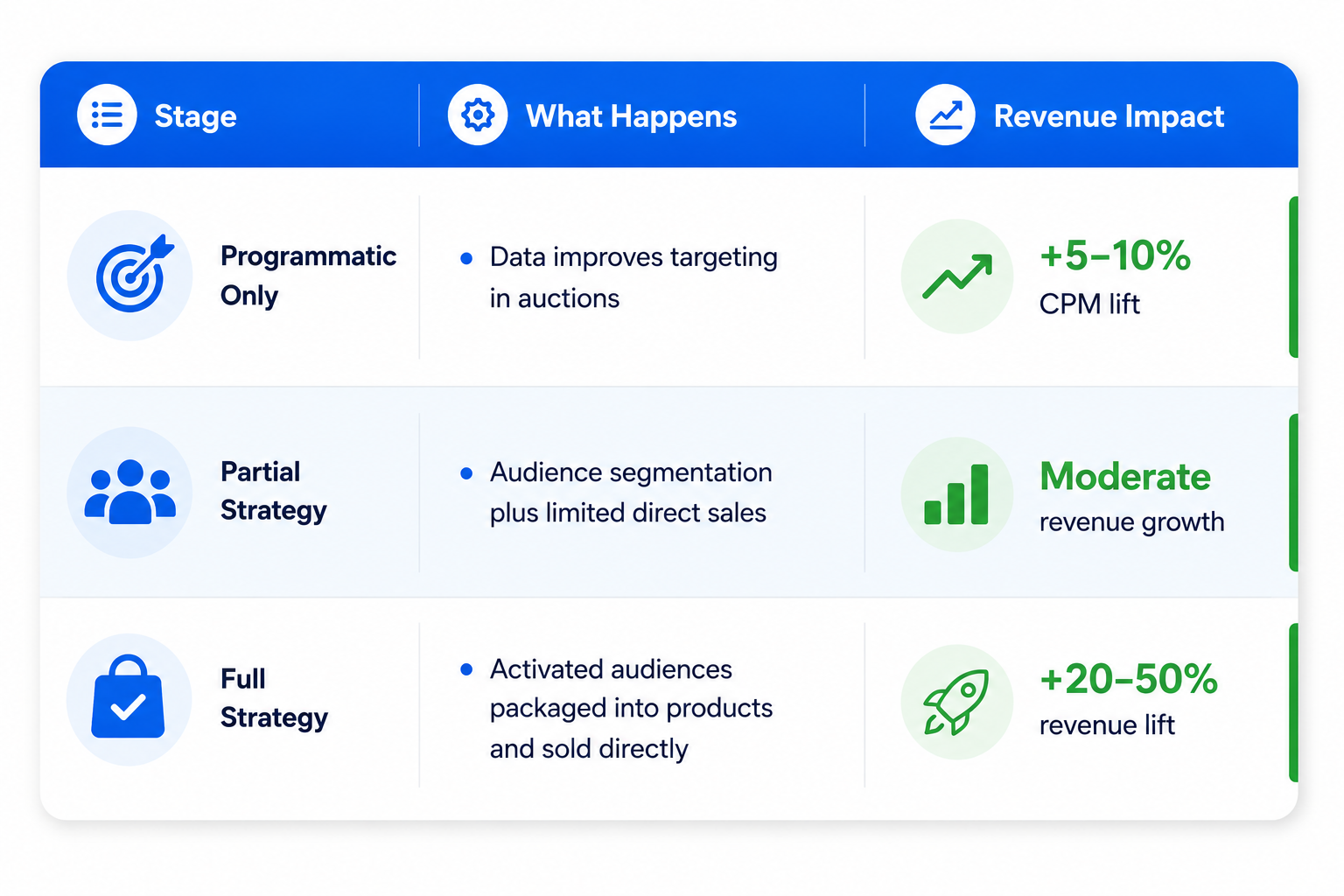
What High-Performing Teams Do Differently
They don't simply collect data. They enrich it, activate it, package it, and monetize it.
They Build Better Audience Profiles
They combine:
- Behavioral signals
- Purchase activity
- Engagement data
- Loyalty information
- User preferences
The richer the audience profile, the more valuable the resulting advertising products become.
They Package Audiences Into Products
Instead of selling impressions, they sell access to valuable audiences.
They Prioritize Direct Monetization
They use first-party data to create differentiated advertising opportunities that advertisers cannot easily find elsewhere.
They Measure and Optimize
They continuously evaluate performance and refine their audience products over time.
Their Stack Looks Like This
Programmatic
- Demand
- Scale
- Liquidity
Ad Server (AdButler)
- Audience activation
- Targeting control
- Inventory packaging
- Direct campaign management
- Revenue optimization
- Performance reporting
Programmatic uses your data. AdButler helps you monetize it.
Where AdButler Fits
AdButler enables publishers, apps, and retail media operators to:
- Activate first-party audience data
- Build premium audience segments
- Package audiences into sellable products
- Run targeted direct campaigns
- Control pricing and delivery
- Measure audience performance
What That Unlocks
- Higher CPMs
- Stronger advertiser relationships
- More predictable revenue
- New retail media opportunities
- Greater control over monetization
What Actually Goes Wrong (And How to Avoid It)
1. Data Exists But Isn't Activated
Teams collect data but never connect it to monetization workflows.
2. Everything Stays Programmatic
Audience data improves auction performance but never becomes a product advertisers can buy directly.
3. No Packaging Strategy
Without defined audience offerings, there is nothing differentiated to sell.
4. No Measurement Framework
Without reporting and performance visibility, premium pricing becomes difficult to justify.
5. No Control Layer
Without an ad server:
- Targeting is limited
- Delivery is inconsistent
- Measurement is fragmented
- Monetization opportunities are constrained
This is why many first-party data strategies stall.
The Bottom Line
If you rely only on programmatic advertising, your data may improve performance.
If you activate, package, measure, and sell that data directly, it becomes a revenue engine.
First-party data is no longer just a targeting advantage.
For publishers, app monetization teams, and retail media operators, it's becoming the foundation of modern advertising revenue.
If You're Trying to Monetize Your Data
If you're:
- Collecting valuable user data
- Building audience segments
- Exploring retail media
- Looking to increase revenue without increasing ad load
It's worth seeing how AdButler helps turn first-party data into sellable inventory.
FAQs
What is first-party data in advertising?
First-party data is information collected directly from your users, including behavior, transactions, preferences, purchases, subscriptions, and engagement activity.
Why isn't programmatic enough to monetize first-party data?
Programmatic platforms may use your data for targeting, but they don't provide full control over pricing, packaging, delivery, and audience product creation.
How do I turn first-party data into revenue?
Activate the data, create audience segments, package those audiences into advertising products, and sell them through direct deals, sponsorships, retail media placements, or premium campaigns.
Do I need an ad server for this?
Yes. An ad server provides the targeting, packaging, delivery, reporting, and pricing controls required to fully monetize first-party data.
