
What is Native Advertising?
Key Takeaways
Native advertising is designed to match the look, feel, and function of surrounding content, allowing ads to integrate seamlessly into user experiences.
Native ads outperform traditional display because they reduce friction and increase engagement, making them a core revenue driver for modern publishers.
Native advertising is a multi-format ecosystem, including sponsored listings, in-feed ads, recommendation units, native skins, and marketplace placements.
Advertisers favor native formats because they align with user intent and drive higher interaction rates, often resulting in significantly higher CPMs.
Publishers benefit from native ads because they preserve user experience, maintaining engagement while monetizing high-traffic environments.
True native advertising requires control over rendering and placement, not just styling display ads to appear “native.”
Client-side ad serving limits native performance, introducing latency, ad blocker exposure, and reduced customization.
Server-side ad delivery enables true native execution, allowing ads to load faster, appear seamlessly, and avoid common technical limitations.
API-based ad servers provide the flexibility required for native advertising, enabling custom formats, placements, and logic aligned with product design.
AdButler enables fully customizable native ad experiences through server-side delivery, giving publishers control over layout, targeting, and monetization strategy.
AdButler eliminates reliance on third-party tags, improving performance, privacy compliance, and adblock resistance.
Modern native advertising platforms are built using API-first infrastructure, allowing teams to launch faster and scale without technical constraints.
Native advertising delivers significantly higher revenue potential than traditional display, often generating 5–20x higher CPMs depending on format and placement.
FTC compliance requires clear labeling of native ads, ensuring transparency while maintaining a seamless user experience.
The future of native advertising is server-side, API-driven, and fully integrated into product experiences, not bolted onto pages through third-party scripts.
At its core, native advertising is simple:
It’s advertising designed to look, feel, and behave like your organic content.
Native ads slide directly into feeds, homepages, content streams, search results, and recommendation units — almost indistinguishable from the surrounding content except for a clear “Sponsored” or “Promoted” label.
That’s why you see native formats everywhere. Not just on social platforms, but across premium publishers — including USA TODAY which uses native skins on its homepage to monetize high-traffic real estate without degrading user experience.
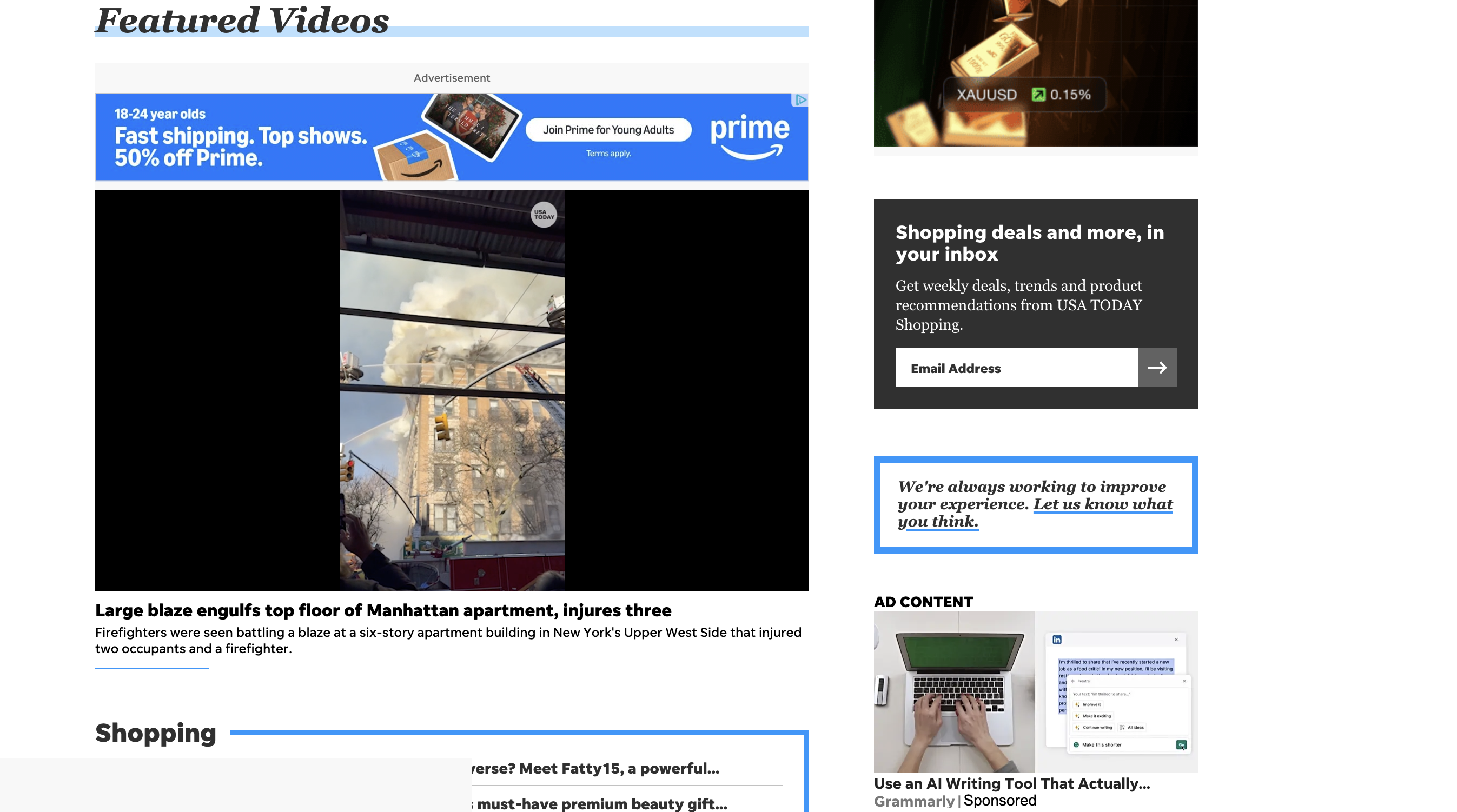
Native is no longer just a “nice to have.” It’s an essential revenue engine.
Why Native Advertising Works (for Publishers and Advertisers)
Native advertising isn’t just a better-looking banner. It’s a multi-billion-dollar channel driving real performance:
$106B in U.S. native ad spend in 2024
Projected to reach $347B by 2033 (Grand View Research)
Growing 13.9% CAGR over the next decade
Why? Because:
1. Advertisers want formats that perform
Native ads outperform standard banners because users actually engage with them. Native units feel like part of the experience, not an interruption.
2. Publishers want frictionless user experiences
Native ads blend directly with site architecture — keeping bounce rates low and on-page time high.
3. The biggest platforms already proved the model
Just look at Amazon, whose native sponsored listings helped drive $15.6B in Q2 2025 — the highest share of revenue their ad business has ever achieved.
Native formats clearly scale.
4. The formats are diverse and revenue-rich
Native isn’t one thing. It includes:
- Sponsored listings
-In-feed ads
Native skins
Recommendation units
Video native placements
-Marketplace product boosts
Each has higher CPMs than traditional displays. In many cases, 5–20x more.
How Publishers Typically Integrate Native Ads
When you break it down, there are only three real ways to launch native ads on a platform:
Option 1 — Build Your Own Native Ad Server (Homegrown)
Companies like Facebook, Amazon, and Pinterest chose this path.
Pros
Full ownership
Full customization
No vendor fees
Cons
Years of development
Heavy engineering cost
Zero revenue during build time
This route makes sense… if you’re already a multibillion-dollar platform.
Option 2 — Use a Third-Party Ad Server or Native Ad Network
This includes solutions like Google Ad Manager, Outbrain, Taboola, Criteo, and others.
Pros
Fastest time to launch
Built-in advertiser demand
Familiar workflows
Cons
Client-side tags break the “native” look
Limited control over ad rendering
Heavy JavaScript slows performance
Privacy concerns from third-party tags
Nearly 30% of impressions lost to ad blockers
Native-ish is not the same as true native.
PS: Depending on your needs, AdButler can also function as a third-party ad server.
Option 3 — Use Ad APIs (The Modern Approach)
This is where AdButler shines.
Using ad APIs lets you build your own native ad platform — but in weeks, not years.
It’s like using Stripe instead of building your own payment rails.
Pros
Server-side native ad delivery
Full customization and brand control
Fast development timeline
Reliable, scalable infrastructure
No messy JavaScript or SDK bloat
Cons
Requires some engineering
You bring your own advertiser demand
Platforms like Costco Wholesale have taken this approach, powering their sponsored listings revenue with native placements that appear alongside organic product results — seamlessly blending content and commerce.

This is the direction the industry is moving.
Why Google Ad Manager & Native Ad Networks Don’t Truly Support Native
Many publishers assume GAM or third-party networks can deliver “native” ads. And they can… sort of.
But the limitations are real:
❌ Client-side only
JavaScript tags will always render ads after the page loads — making them look like ads.
❌ Security & privacy risks
Tags can introduce malware or drop unauthorized third-party cookies.
❌ Slow load times
Client-side ads often take 500ms+, destroying user experience and hurting revenue. Server-side ad APIs routinely serve in 35ms.
❌ Easy for ad blockers to detect
A full 30% of impressions never get filled.
❌ No deep customization
GAM “native” still forces templates. It’s not native — it's a dressed-up display.
If you want a real native, you need server-side decisioning.
The Server-Side Advantage (And Why AdButler Leads Here)
✔ True native rendering
Your team controls exactly how ads appear — layout, style, placement, content, rules.
✔ Faster pages, happier users
Server-side requests eliminate bulky client scripts.
✔ Secure, privacy-first architecture
No third-party tags = no risk of malware or unwanted cookies.
✔ Adblock-resistant monetization
No detectable tags. No blocked impressions.
✔ Complete control
Ads become part of your product — not a bolt-on widget.
This is how modern ad platforms are built.
Is Native Advertising FTC Compliant?
Yes — when done correctly.
To follow FTC guidelines, ensure:
Ads are distinguishable
Sponsored content is clearly labeled
Labels are not hidden or misleading
Native ≠ deceptive. Native = seamless. Big difference.
(For a full checklist, see our article on FTC native ad compliance.)
How Much Can Publishers Make With Native Ads?
Native CPMs vary widely — but consistently outperform standard display:
Standard display: $0.50–$1.50
Native ads: multiple dollars to double-digit CPMs, depending on format
Sponsored listings, recommendation units, and native skins routinely deliver 5–20x the revenue of a typical banner.
For publishers with traffic and engaged audiences, native is one of the highest-yield revenue channels available.
How to Launch Native Advertising Quickly
If you’re ready to launch native without spending years (or millions) building infrastructure, AdButler is here to help.
We’ve helped innovative publishers and marketplaces integrate high-revenue, fully native ad products with:
Server-side ad decisioning
Custom targeting
Real-time reporting
Forecasting & pacing via API
Granular placement control
Cross-device user logic
Audience and creative management
And we’ve seen customers launch fully custom native ad platforms in weeks, not years.
Ready to Build Your Native Ad Platform?
Native advertising is no longer optional. It’s an essential revenue engine for modern publishers, and the formats, performance,and user expectations are only trending upward.
If you want:
faster load times
higher CPMs
better UX
stronger advertiser relationships
no more JavaScript ad tag headaches
control over every pixel of your ad experience
Then you’re ready for AdButler.
Let’s build something revenue-driving and truly native.
If you’re exploring native advertising, we’d love to chat.
FAQs
What is native advertising?
Native advertising is a form of advertising designed to match the look, feel, and behavior of the surrounding content, making it appear as a natural part of the user experience.
Why does native advertising perform better than display ads?
Native advertising performs better because it blends into content environments, reducing user resistance and increasing engagement compared to traditional banner ads.
What types of native ad formats exist?
Native formats include sponsored listings, in-feed ads, recommendation widgets, native skins, video placements, and marketplace product promotions.
How do publishers implement native advertising?
Publishers typically implement native advertising by building custom solutions, using third-party ad networks, or adopting API-based ad servers for greater control and flexibility.
What is the difference between true native and “native-style” ads?
True native ads are fully integrated into the product experience through server-side rendering, while native-style ads are often client-side display ads styled to appear native.
Why is server-side delivery important for native advertising?
Server-side delivery improves performance, reduces latency, avoids ad blockers, and enables full control over how ads are rendered within the user experience.
How does AdButler support native advertising?
AdButler provides server-side ad delivery and API-based control, allowing publishers to build fully customized native ad formats with precise targeting and performance tracking.
Is native advertising compliant with regulations?
Native advertising is compliant when it clearly discloses sponsored content and ensures ads are distinguishable from organic content.
How much revenue can native advertising generate?
Native advertising typically generates higher CPMs than display ads, often delivering multiple times the revenue depending on format and audience engagement.
Why are API ad servers important for native advertising?
API ad servers allow developers to build native ad experiences directly into their platforms, enabling flexibility, scalability, and full control over monetization.
