
Travel Audiences Don’t Just Browse. They Decide.
Key Takeaways
Travel audiences are high-intent by nature, not by inference, as they actively plan, compare, and commit to high-value decisions over defined timeframes.
Intent in travel is explicit and time-bound, driven by real actions such as destination searches, date selection, and booking progression rather than modeled behavior.
Travel decisions are structurally different from other verticals, combining high value, infrequency, and extended planning windows that create multiple monetizable touchpoints.
Travel platforms have direct access to declared intent signals, including routes, travel dates, trip purpose, and booking stages, which are unavailable to most third-party ad platforms.
Intent-driven advertising in travel consistently outperforms broad targeting, delivering higher conversion rates and more efficient customer acquisition.
Travel intent is perishable and requires real-time activation, as missed decision windows result in lost monetization opportunities.
Third-party platforms cannot replicate the depth and timing of travel intent, because they operate outside the core booking and planning journey.
Travel Media Networks are built on the ability to capture and activate high-intent audiences, turning decision moments into scalable advertising opportunities.
Independent ad servers like AdButler enable travel companies to operationalize intent, providing control over data, delivery, and monetization without relying on external platforms.
Owning the media stack allows travel companies to control demand access, pricing, and measurement, creating more sustainable and transparent revenue models.
The future of travel advertising belongs to companies that treat intent as infrastructure, not just a targeting signal.
Why High-Intent Travel Audiences Are the Internet’s Most Powerful Advertising Opportunity
If you’re still treating travel audiences like just another “interest group,” you’re leaving performance on the table.
Travel audiences are structurally different from most digital audiences. They aren’t casually scrolling. They aren’t passively consuming content. They’re actively making decisions—often expensive ones—over a defined window of time.
That’s why travel has become one of the most valuable high-intent advertising environments on the internet, and why advertisers are increasingly shifting budgets toward Travel Media Networks.
From AdButler’s perspective, it’s inevitable. And the companies that understand why travel intent works differently are the ones building durable, defensible media businesses.
What “Intent” Actually Means
In advertising, intent isn’t about interest. It’s about readiness.
High-intent signals tell you:
Someone is actively evaluating options
The context of that decision
The likelihood of near-term action
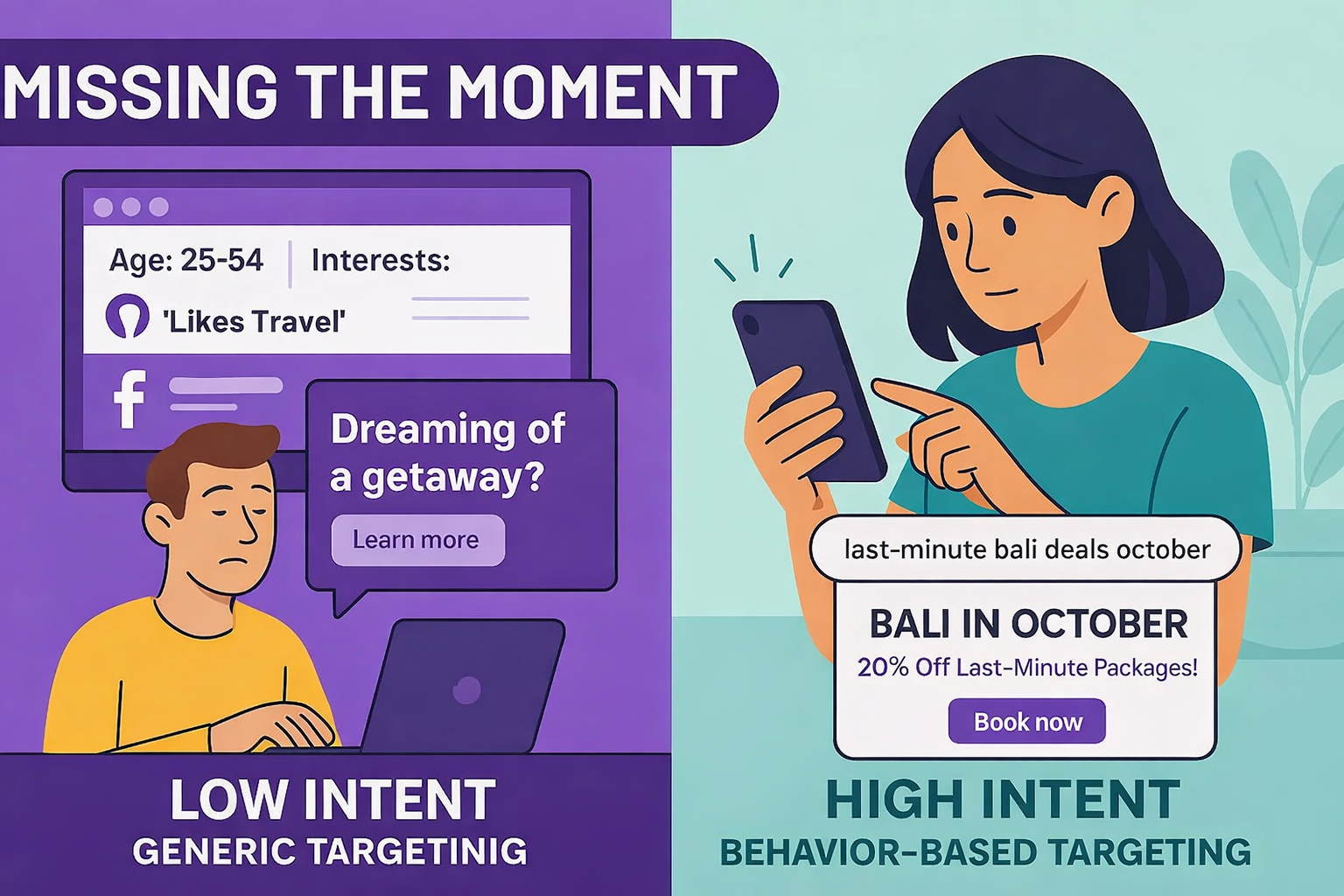
Most digital advertising operates on proxy intent—content consumption, lookalike behavior, or modeled assumptions. Travel doesn’t need proxies.
Travel platforms see intent declared in real time.
Why Travel Intent Is Fundamentally Different
Travel decisions have a structure most other verticals don’t.
They are:
High-value (one trip can be worth thousands)
Infrequent (people don’t book flights every week)
Planned over time (days, weeks, sometimes months)
Context-rich (destination, dates, purpose, party size)
Compare that to retail or content consumption:
Many purchases are impulsive
Context is shallow or inferred
Timing is unpredictable
When someone searches for a destination, selects dates, compares routes, or moves toward booking, they’re not exploring—they’re committing.
That’s what makes travel audiences some of the highest-intent audiences on the internet.
It’s also why intent-driven travel campaigns consistently outperform broad targeting—often delivering two to three times higher conversion rates and significantly lower acquisition costs.
The Signals Only Travel Platforms Can See
Travel companies don’t guess intent. They observe it.
Declared signals include:
Destination and route selection
Travel dates and trip duration
Business vs. leisure travel
Booking progression (search → select → confirm)
On-trip behavior and post-booking changes
These are explicit decisions—not modeled behaviors.
And critically, these signals unfold over time, giving advertisers multiple moments to engage with relevance and precision.
This intent is perishable—miss the moment, and the opportunity disappears.
This is the foundation of Travel Media Networks.
Why Third-Party Ad Platforms Can’t Replicate This
Most ad platforms operate outside the travel journey.
They don’t see:
The full planning window
The timing between decisions
The purpose behind the trip
The moment intent crystallizes
Instead, they infer.
For example, someone actively comparing flight prices and checking date-specific availability is far more valuable than someone who simply “likes travel content”—but most third-party platforms can’t tell the difference.
That gap—between where intent exists and where ads are traditionally delivered—is exactly why travel publishers are realizing the value of owning their media stack.
And it’s why brands are paying closer attention.
Turning Travel Intent into a Scalable Media Business
As an ad server purpose-built for publishers and media networks, AdButler gives travel companies the control they need to monetize high-intent audiences—without handing ownership to third parties.
AdButler provides the infrastructure required to:
Own first-party travel intent
Control how demand accesses that intent
Scale media operations without sacrificing transparency or margin
This isn’t about bolting ads onto a booking flow. It’s about architecting an intent-driven advertising ecosystem.
Activate Your Way with AdButler
Whether you’re an agency activating campaigns for travel brands, or a travel platform monetizing high-intent travelers directly, activating travel media with AdButler is simple:
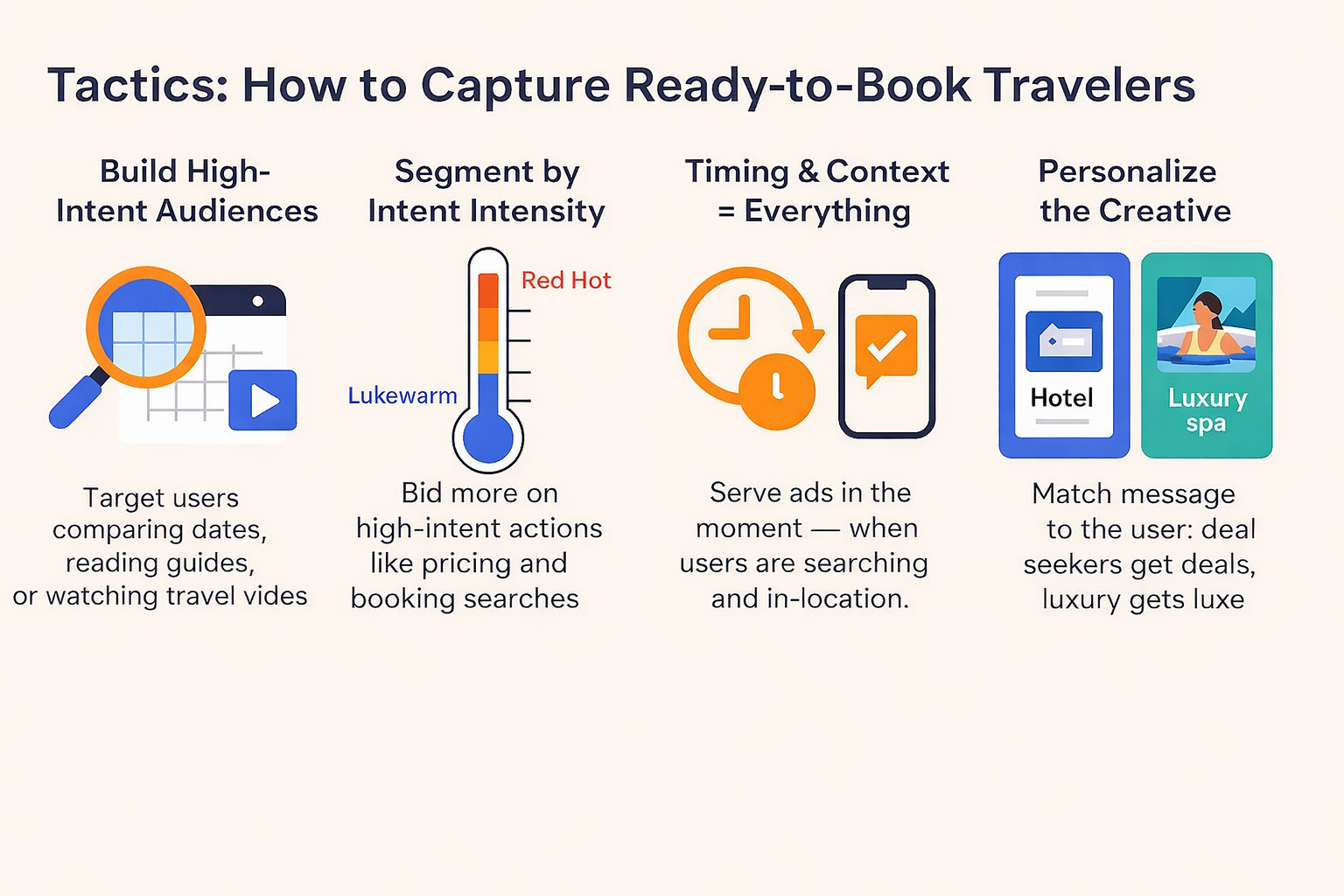
Set your strategy. Define objectives, KPIs, markets, budgets, and flight dates—whether you’re running performance, sponsorship, or full-funnel campaigns.
Configure your inventory. Package on-site, in-app, or off-site placements using your first-party travel data and contextual signals.
Connect demand. Support direct deals, PMP, or programmatic demand through your preferred buying partners—without losing control of pricing or data.
Go live and optimize. Launch campaigns, manage delivery in real time, and optimize performance with full transparency across your media stack.
High-intent travel audiences. Activated on your terms.
With AdButler, Travel Media Scales on Your Terms
High-intent travel audiences are already in your ecosystem. The opportunity is activating them with control, transparency, and flexibility.
Get in touch with AdButler to see how leading travel brands and publishers are using our ad server to power high-performing Travel Media Networks—without giving up ownership of their data, demand, or margins.
Looking to go deeper? Our Travel Media Network Playbook walks through the fundamentals and best practices for high-intent travel advertising.
FAQs
What makes travel audiences high-intent compared to other digital audiences?
Travel audiences are high-intent because they are actively planning and making decisions, such as selecting destinations and booking trips, rather than passively consuming content.
What is travel intent in advertising?
Travel intent refers to signals that indicate a user is preparing to take action, such as searching for flights, comparing options, or progressing through a booking journey.
Why does travel advertising perform better than broad targeting?
Travel advertising performs better because it targets users during real decision-making moments, resulting in higher relevance, conversion rates, and efficiency.
What types of signals indicate travel intent?
Travel intent signals include destination selection, travel dates, booking progression, trip purpose, and on-trip behavior, all of which reflect real user decisions.
Why can’t third-party ad platforms capture travel intent effectively?
Third-party platforms cannot capture travel intent effectively because they lack visibility into the full planning and booking journey, relying instead on inferred or modeled behavior.
What is a Travel Media Network in the context of high-intent audiences?
A Travel Media Network is an owned media system that uses first-party data and decision-stage signals to deliver relevant advertising throughout the travel journey.
How can travel companies monetize high-intent audiences?
Travel companies can monetize high-intent audiences by using platforms like AdButler to activate first-party data, control ad delivery, and manage advertiser demand across channels.
Why is timing important in travel advertising?
Timing is critical because travel intent is perishable, and engaging users at the right moment in their decision journey significantly increases the likelihood of conversion.
What role does ad serving play in travel media monetization?
Ad serving acts as the infrastructure that enables targeting, delivery, measurement, and control across all advertising touchpoints within a travel ecosystem.
Why is owning the media stack important for travel companies?
Owning the media stack allows travel companies to control their data, pricing, and advertiser relationships, ensuring long-term revenue and strategic independence.
