
5 Strategies Publishers Use to Reclaim Revenue in an Ad-Blocked World
Key Takeaways
Ad blocking is a structural challenge for publishers, with a significant portion of users preventing ads from loading entirely.
Revenue loss from ad blockers occurs at the delivery level, where ads are blocked before they render, not because of poor performance or demand.
Ad blockers target patterns, not ad quality, including third-party scripts, known domains, and client-side delivery methods.
Server-side ad delivery reduces exposure to ad blockers, allowing ads to be integrated into content before reaching the user’s device.
SSAI (server-side ad insertion) is becoming a standard for video and streaming monetization, improving resilience, playback, and fill rates.
Acceptable Ads programs provide incremental recovery, allowing non-intrusive ads to reach opted-in users while maintaining user trust.
Native advertising is more resilient to ad blocking, as it blends into content and avoids common banner-based detection patterns.
First-party ad serving reduces reliance on blocklisted infrastructure, improving delivery stability and control over monetization.
Ad blocker detection improves reporting accuracy, helping publishers understand lost impressions without disrupting user experience.
Not all missing ads are caused by blockers, with factors like privacy modes and browser settings also impacting delivery.
Modern publishers are shifting from bypass tactics to infrastructure strategies, focusing on resilience rather than circumvention.
AdButler enables first-party, server-side ad delivery, reducing dependency on third-party tags and improving performance across environments.
AdButler supports native, server-side, and direct ad serving strategies, helping publishers recover revenue without compromising UX.
Ownership of ad infrastructure is key to long-term monetization stability, especially in a privacy-first, ad-blocked web.
The future of publisher monetization is built on control, transparency, and user-aligned experiences, not workarounds or adversarial tactics.
Ad blockers aren’t going away. If anything, they’ve become the default setting for a growing share of the internet.
For publishers, that reality forces a hard question: do you keep fighting ad blockers head‑on, or do you evolve how ads are delivered altogether?
We’ve seen the most successful publishers doing the latter. They’re not chasing loopholes or playing whack‑a‑mole with browser extensions.
They’re redesigning their monetization stack to be more resilient, more transparent, and more aligned with how modern users actually consume content.
Let’s break down practical, publisher‑first strategies to reduce revenue loss from ad blockers.
Why Ad Blocking Still Hurts (and Why Ignoring It Is Expensive)
Ad blocking has quietly shifted from a niche behavior to a mainstream habit. A significant share of global internet users now browse with some form of ad filtering enabled — on desktop, mobile, and increasingly within privacy‑focused browsers.
Nearly 43% of internet users worldwide now block ads, representing roughly 912 million users globally. In the U.S. alone, about 32% of users actively block ads, with mobile ad blocking now growing faster than desktop.
The most commonly cited reasons are poor browsing experiences, intrusive formats, and privacy concerns.
The impact on publishers is material:
- Ads never render
- Impressions never register
- Revenue disappears before it even has a chance to compete
Industry estimates suggest publishers risk up to $54 billion in lost revenue annually, representing roughly 8% of global digital ad spend, if ad blocking remains unaddressed.
What’s often missed is where the loss happens. Many ads don’t fail because the creative was bad or demand was weak — they fail because the delivery path itself was blocked before the page finished loading.
That distinction matters, because it changes how publishers should respond.
How Ad Blockers Actually Block Ads (A Quick Reality Check)
Most ad blockers don’t evaluate the “quality” of an ad. They evaluate patterns.
Specifically, they look for:
- Known third‑party domains and scripts
- Standardized banner containers and class names
- Long client‑side request chains
- Tracking pixels and behavioral scripts
If a resource matches a rule in a blocklist, it’s prevented from loading or hidden after the page renders.
That means even perfectly acceptable, non‑intrusive ads can be blocked simply because they look like ads from a delivery standpoint.
For publishers, this creates a clear takeaway:
The more your monetization relies on widely‑listed infrastructure and client‑side tags, the easier it is to block.
Strategy #1: Shift Ad Delivery Server‑Side (Where Blockers Can’t See)
One of the most reliable ways to reduce ad blocking impact is to move ad insertion away from the browser altogether.
Why Server‑Side Ad Insertion Works
With server‑side ad insertion (SSAI), ads are stitched into content before it reaches the user’s device. Instead of the browser making separate ad calls that blockers can intercept, the ad is delivered as part of the primary content stream.
This approach is already standard in:
- OTT and CTV environments
- Live and on‑demand video
- Audio and streaming media
From the user’s perspective, playback is smoother. From the publisher’s perspective, delivery becomes far more resilient.
Where AdButler Fits In
AdButler supports server‑side delivery models that allow publishers to:
- Control ad logic upstream
- Reduce client‑side dependencies
- Improve playback stability and fill rates
In 2026, SSAI is a baseline expectation for video monetization.
Strategy #2: Recover Value with Acceptable Ads (Without Breaking Trust)
Not every publisher wants to “bypass” ad blockers entirely and that’s reasonable.
Acceptable Ads takes a different approach: work within ad blocker rules instead of against them.
How Acceptable Ads Help Publishers
When users opt in, certain non‑intrusive formats are allowed through supported blockers. These ads follow strict standards around:
- Size and placement
- Clear labeling
- No disruptive behavior or tracking
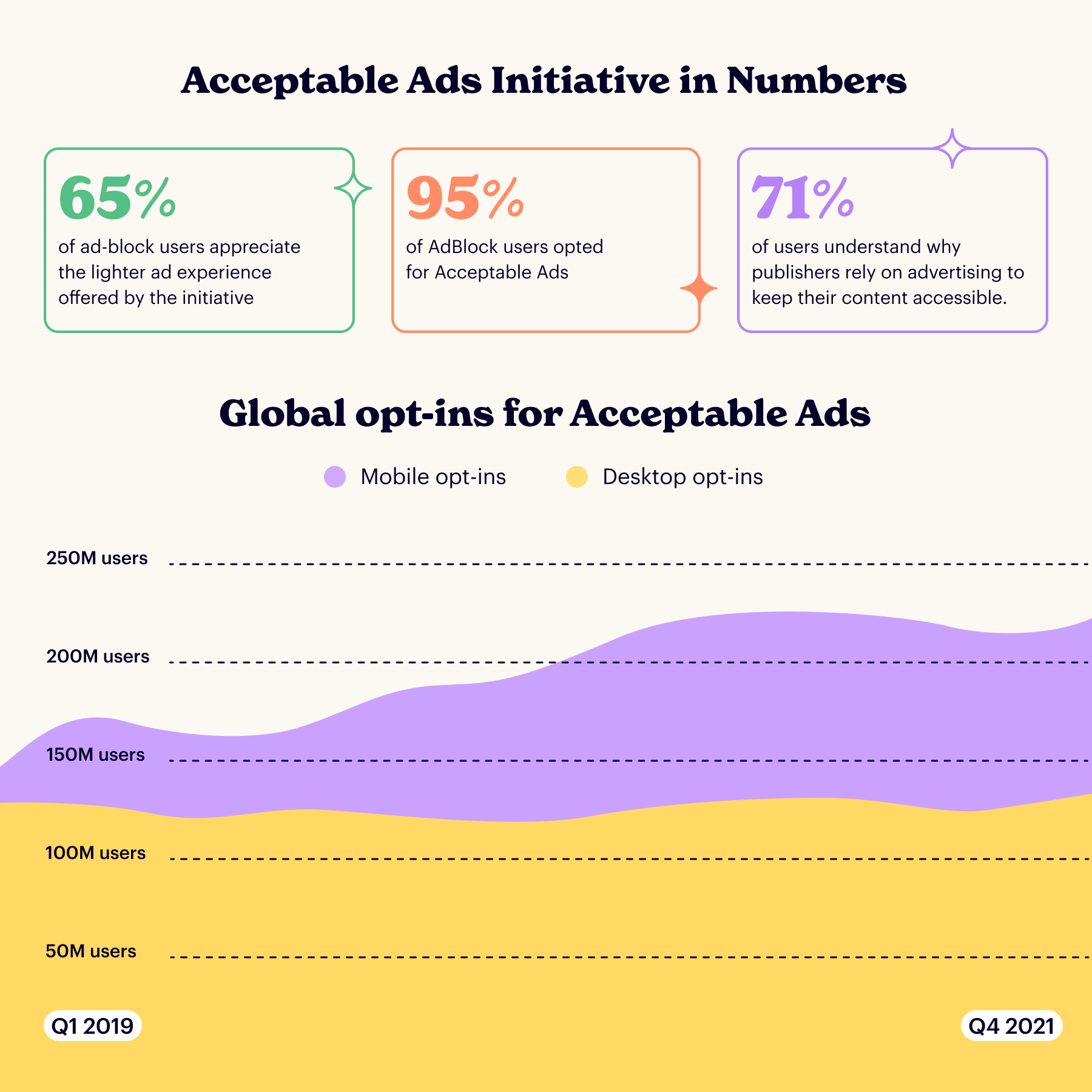
As of recent industry reports, Acceptable Ads reaches hundreds of millions of users globally, with opt‑in rates exceeding 90% across supported browsers and ad‑blocking tools.
That scale makes it one of the few viable ways to monetize users who would otherwise see no ads at all.
The upside?
- Ads reach users who would otherwise see nothing
- UX stays intact
- Publishers recover some blocked impressions
The trade‑off is equally clear:
- CPMs are lower than premium demand
- Fees may apply for larger publishers
- It’s a complement, not a core strategy
Acceptable Ads work best as incremental revenue, not a replacement for primary monetization.
Strategy #3: Lean into Native Formats That Users Don’t Hate
When ads blend naturally into content, they’re less likely to trigger blockers and more likely to earn engagement.
Why Native Ads Perform Better in a Blocked Environment
Native placements:
- Match the look and feel of the page
- Avoid obvious banner patterns
- Tend to generate higher engagement than standard display
That performance is reflected in ad spend. In the U.S., native display ad spend is forecast to reach $147.98 billion in 2026, growing 13.1% year over year.
Common native formats include:
- In‑feed sponsored cards
- Promoted editorial links
- Recommendation widgets
- Short‑form sponsored video
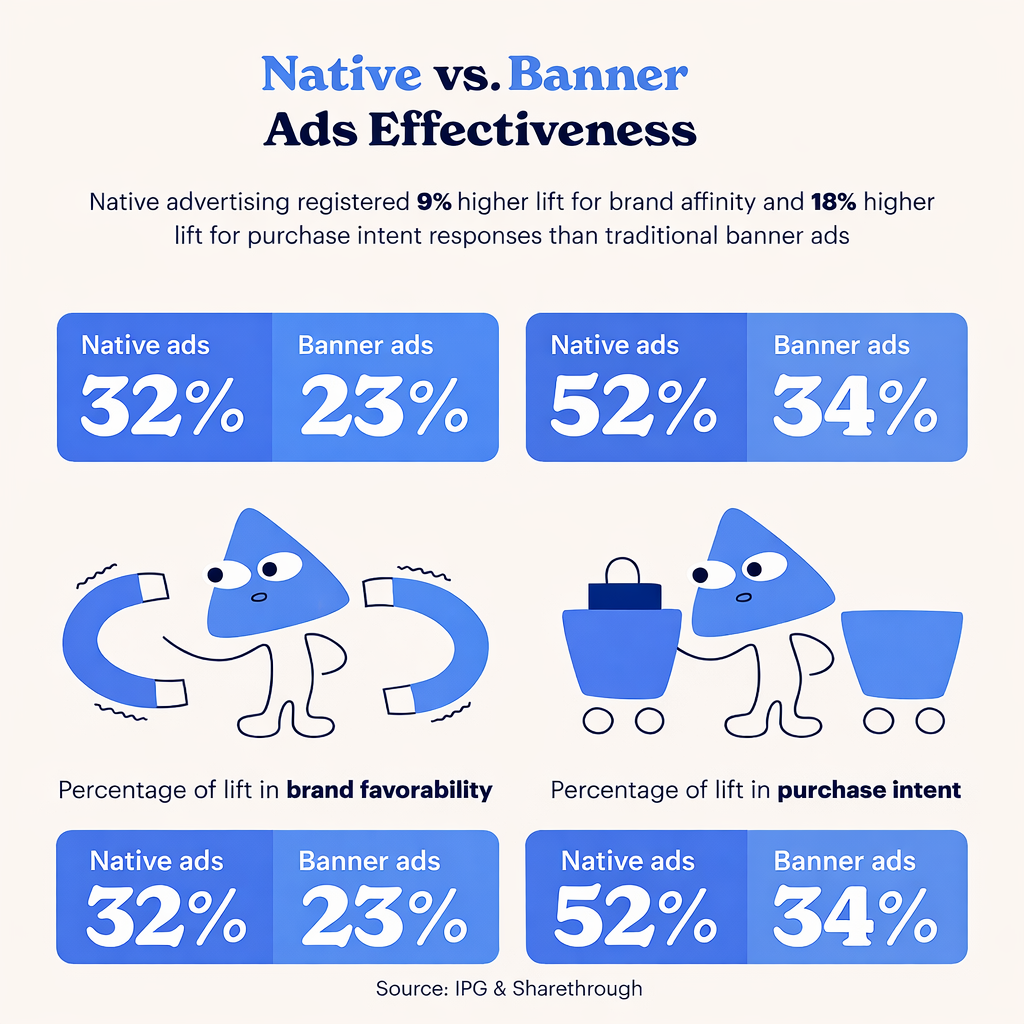
Native ads aren’t immune to blocking but they’re far more resilient than standard banners, especially when delivered via first‑party infrastructure.
With AdButler, publishers can serve native placements without relying on third‑party tag libraries, keeping load times fast and layouts stable.
Strategy #4: Detect Ad Blocking to Fix Reporting (Not to Punish Users)
Detection isn’t about forcing users to disable blockers. It’s about understanding what’s actually happening on your site.
What Smart Detection Looks Like
Lightweight detection scripts can identify when ads fail to load and separate that traffic from normal impressions.
This allows publishers to:
- Clean up performance reporting
- Avoid distorted CPM and viewability metrics
- Analyze behavior without hard paywalls or pop‑ups
Some publishers pair detection with server‑side analytics to maintain visibility even when client‑side scripts are blocked.
Important: Not All “Missing Ads” Are Ad Blockers
- Incognito mode: ads load, but targeting is limited
- Reader mode: ads don’t render at all
- Privacy browsers: behavior varies widely
Understanding these differences prevents bad optimization decisions.
Detection improves data quality, not just monetization.
Strategy #5: Take Back Control with Direct, First‑Party Ad Serving
Most ad blockers target what’s popular, not what’s malicious.
That’s why ads served through:
- Mass‑market networks
- Long third‑party chains
- Common tag libraries
…are more likely to be filtered.
Why First‑Party Delivery Is More Resilient
Running ads through your own ad server allows you to:
- Use first‑party tags
- Reduce third‑party dependencies
- Control domain usage and layout behavior
AdButler gives publishers full ownership over delivery without forcing them into closed ecosystems or black‑box demand.
This doesn’t override user choice. But it removes unnecessary exposure to blocklists and stabilizes delivery across environments.
Bypassing Ad Blockers Isn’t the Only Goal
Trying to “beat” ad blockers outright is a losing game.
The publishers winning in 2026 are doing something smarter:
- Reducing reliance on fragile delivery paths
- Designing ads users tolerate (or even value)
- Owning their infrastructure and data
AdButler isn’t about forcing ads through blockers. It’s about giving publishers the control to monetize on their own terms", even as the ecosystem keeps changing.
Take charge of your delivery and become independent of third-party tags listed by ad blockers with AdButler’s independent ad server.
FAQs
Why do ad blockers impact publisher revenue?
Ad blockers prevent ads from loading entirely, eliminating impressions and reducing revenue before ads can compete or perform.
How do ad blockers detect ads?
Ad blockers identify ads based on patterns such as third-party domains, scripts, and common ad container structures rather than evaluating content quality.
What is server-side ad insertion (SSAI)?
Server-side ad insertion delivers ads as part of the content stream, making them less visible to ad blockers and improving performance.
What are Acceptable Ads?
Acceptable Ads are non-intrusive ad formats allowed by some ad blockers when users opt in, enabling limited monetization while preserving user experience.
Why are native ads more resistant to ad blockers?
Native ads blend into content and avoid standard banner formats, making them less likely to be detected or blocked.
What is first-party ad serving?
First-party ad serving uses a publisher’s own infrastructure to deliver ads, reducing reliance on third-party scripts and improving control.
Should publishers try to bypass ad blockers?
Rather than bypassing ad blockers, publishers are shifting toward resilient delivery methods and better user experiences to reduce impact.
How does ad blocker detection help publishers?
Detection helps publishers understand when ads fail to load, improving reporting accuracy and informing monetization strategies.
How does AdButler help publishers reduce ad blocker impact?
AdButler enables server-side, first-party ad delivery and supports native formats, helping publishers maintain revenue while minimizing exposure to blocklists.
What is the best long-term strategy against ad blockers?
The most effective strategy is to build resilient, user-friendly monetization systems that rely less on blockable infrastructure and more on first-party control.
