
Every Mobile App Is a Media Network Now (Most Just Don’t Realize It Yet)
Key Takeaways
- Every mobile app already has the ingredients of a media network: audience, intent, and inventory
- The value of that audience is determined by the data you capture at acquisition
- Mediation platforms optimize programmatic demand—but don’t create a monetization strategy
- The highest-margin revenue in apps comes from direct deals, not auctions
- Leading apps layer direct monetization on top of mediation—not replace it
- AdButler enables apps to control inventory, run direct campaigns, and monetize beyond auctions
The Shift Happening in Mobile (Whether You Notice It or Not)
Most mobile apps today are sitting on something far more valuable than they realize.
Not just users. Not just engagement.
They’re sitting on a media business.
But here’s the part most teams miss:
The value of that “media business” is defined at acquisition
What you capture at signup; data, intent, behavior, determines how valuable each user becomes.
If your app has:
- repeat usage
- user intent
- moments of discovery
You already have:
- ad inventory
- audience segments
- monetizable placements
That’s the exact foundation of a media network.
Let’s make this concrete:
- A shopping app’s search results = sponsored listings
- A content app’s homepage = premium placement inventory
- A gaming app’s store or lobby = featured brand integrations
These aren’t just UX elements.
They’re ad products
And yet—most apps are still monetizing like it’s 2015.
The Problem: Optimization ≠ Strategy
When teams think about monetization, the conversation usually starts and ends with:
- eCPM
- fill rate
- waterfall optimization
bidding partners Which leads to tools like:
AppLovin MAX
- AdMob
- ironSource
These are powerful platforms. No question.
But let’s be clear about what they actually do:
They optimize demand
They do not define your revenue strategy
They answer:
“What’s the best price for this impression right now?”
They don’t answer:
- What should this inventory be worth?
- How should it be packaged?
- Which placements should be premium?
- How do we sell this directly to brands?
That gap is where most apps plateau.
Where Mobile Revenue Actually Plateaus
If you rely entirely on programmatic:
- you access the same demand as everyone else
- you compete in the same auctions
- you optimize toward the same ceiling
At a certain point:
you’re not growing revenue—you’re just fine-tuning it
And the gap between “good” and “great” becomes marginal.
Your App Already Has Media Inventory
Download our Mobile Monetization Playbook to learn how leading apps turn audience data, premium placements, and direct deals into higher-margin revenue.
The Apps Pulling Ahead Are Playing a Different Game
The highest-performing apps aren’t just optimizing ads.
They’re doing something fundamentally different:
They’re monetizing inventory like a product
That includes:
- sponsored placements
- featured listings
- homepage takeovers
- native integrations
- retail media-style units
These are:
- high-margin
- non-commoditized
- not exposed to auction pressure
And most importantly:
they’re controlled—not auctioned
This Is the Retail Media Playbook; Now Inside Apps
Retail media didn’t explode because of better bidding.
It exploded because companies realized:
“We own the audience. We should own the monetization.”
That same logic is now moving into mobile apps.
If your app has:
- search behavior
- browsing patterns
- purchase signals
- content consumption
That’s not just engagement
That’s first-party data captured from acquisition onward
And that data determines:
- targeting precision
- pricing power
- revenue per user
This is exactly what advertisers want.
So Why Aren’t More Apps Doing This?
Because the stack hasn’t made it easy.
Most teams think they have two options:
- Use mediation (fast, but limited control)
- Build something custom (flexible, but expensive and slow)
You Don’t Have to Choose
The best-performing apps today don’t replace mediation.
They layer on top of it.
The Modern Mobile Stack Looks Like This:
Layer 1: Mediation (AppLovin MAX, AdMob, etc.)
- programmatic demand
- auction optimization
- baseline revenue
Layer 2: Ad Server (AdButler)
- direct deals
- premium placements
- sponsorships
- inventory control
- first-party data activation
Where AdButler Fits
AdButler isn’t competing with mediation.
It complements it.
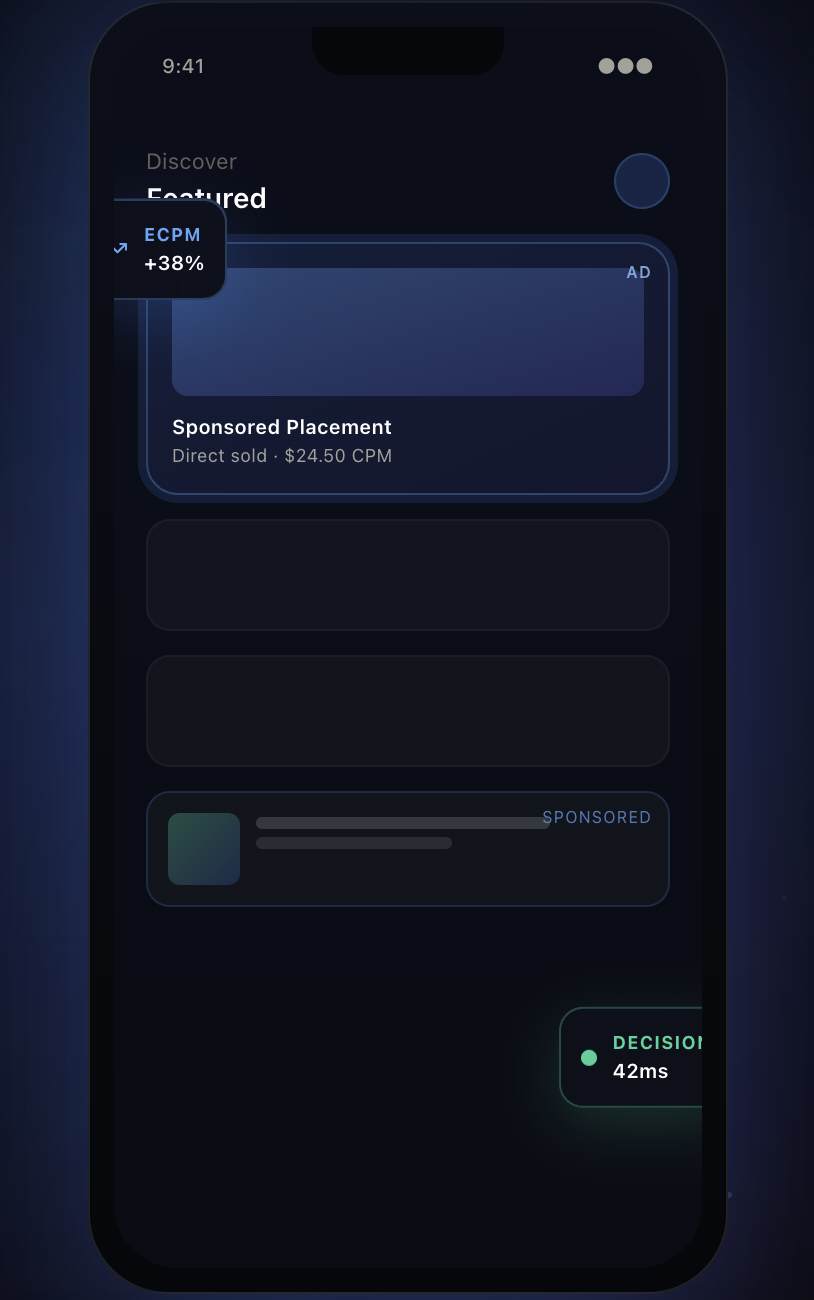
It gives you the ability to:
- reserve inventory for premium campaigns
- run guaranteed deals with brands
- sell placements directly (not just via auctions)
- control pricing and delivery
- activate first-party data in monetization
- build self-serve advertiser workflows
In other words:
It turns ad inventory into a monetization system—not just an auction feed
The Real Opportunity (That Most Apps Are Missing)
Right now, most apps are asking:
“How do we get better CPMs?”
But the better question is:
“How do we use the data we capture from users to make our inventory more valuable?”
Because:
- better bidding = incremental gains
- better positioning + data = exponential gains
What This Means Going Into MAU
If you’re heading into MAU Vegas, this is the shift to pay attention to:
Apps are no longer just ad-supported products
They’re becoming media businesses powered by their own data
And the gap is widening—fast.
The teams that understand this early will:
- unlock higher-margin revenue
- reduce reliance on programmatic
- build direct advertiser relationships
- control their monetization strategy
The Bottom Line
Mediation helps you optimize ads.
But it doesn’t build a business.
Data + direct monetization does.
And the apps that win over the next few years won’t just optimize better..
They’ll monetize smarter
Stop Treating Monetization Like an Auction Feed
Get the Mobile Monetization Playbook to see how top apps monetize like media companies with first-party data, inventory control, and direct campaigns.
Book a walkthrough or see how you can turn your app into a media network
FAQs
What does it mean for an app to be a media network?
It means your app monetizes its audience directly—through premium placements, sponsorships, and structured inventory—not just programmatic ads.
Is programmatic advertising still important?
Yes. Programmatic provides baseline revenue and demand. But relying on it alone limits growth potential.
Do I need to replace my mediation platform?
No. The most effective approach is layering an ad server like AdButler alongside mediation—not replacing it.
Is this only for large apps?
No. Mid-sized apps often benefit the most because they already have engaged audiences but haven’t fully monetized them.
