
Contextual Targeting: How to Make Your Ads Feel Native Again
Key Takeaways
Contextual targeting matches ads to content, not users, making it a privacy-safe alternative to behavioral targeting.
Relevance in contextual advertising comes from the moment, not historical user data or identity tracking.
Modern contextual targeting uses semantic analysis, including topics, sentiment, and structure—not just keywords.
The decline of third-party cookies is accelerating the shift to contextual strategies, as identity-based targeting becomes less reliable.
Contextual ads meet rising user expectations for privacy, delivering relevance without tracking or personal data collection.
Performance of contextual targeting has improved significantly, with AI-driven systems enabling results comparable to behavioral targeting.
Contextual targeting relies on clear signals from both publishers and advertisers, including content categorization and targeting criteria.
Standardized taxonomies like the IAB Content Taxonomy enable scalable contextual targeting across platforms.
Publishers can turn content into premium, addressable inventory by organizing pages into contextual segments.
Advertisers gain precision and brand safety by choosing where ads appear, rather than relying on opaque audience targeting.
Contextual targeting improves user experience, as ads align naturally with the surrounding content.
Higher relevance leads to stronger engagement, recall, and purchase intent, especially in high-intent content environments.
Contextual strategies are inherently privacy-first and future-proof, requiring no cookies, identifiers, or consent frameworks.
AdButler enables contextual targeting through deterministic control, allowing publishers and advertisers to define placement logic and activate first-party contextual signals.
The shift from targeting users to targeting moments is redefining digital advertising strategy, with context becoming the primary signal of intent.
Contextual targeting is having a moment. Again.
But this time, it’s not driven by hype or nostalgia for "simpler times" in digital advertising. It’s being driven by necessity, performance, and a very real shift in how the internet works.
Third‑party cookies are fading. User expectations around privacy are rising. And advertisers and publishers are being forced to answer a hard question:
How do we keep ads relevant without creeping people out?
Done right, contextual targeting doesn’t just solve for privacy. It improves performance, protects brands, and helps publishers unlock more value from the content they already create.
What Contextual Targeting Really Means Today
At its core, contextual targeting matches ads to the environment they appear in—not the individual viewing them.
If someone is reading an article about marathon training, they’re naturally more receptive to ads about running shoes, recovery tools, or sports nutrition. No identity graph required.
This is what makes contextual advertising fundamentally different from behavioral targeting:
- Behavioral targeting asks, “Who is this person?”
- Contextual targeting asks, “What is this moment about?”
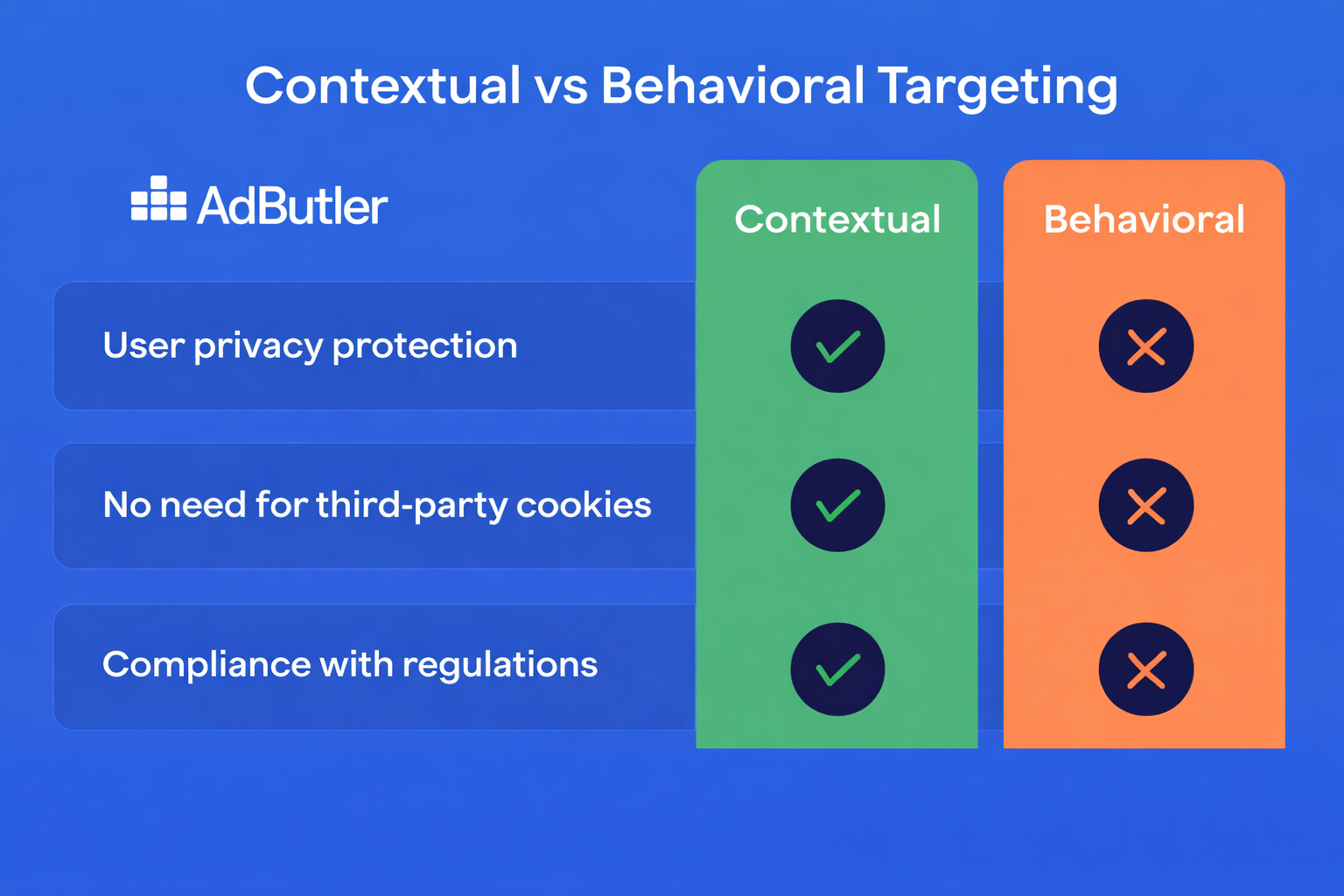
And moments matter.
Modern contextual targeting goes far beyond simple keyword matching. Today’s systems analyze:
- Page topics and categories
- Semantic meaning (not just exact keywords)
- Sentiment and tone
- Content structure
- Media type (text, video, audio)
The result? Ads that feel less like interruptions and more like natural extensions of the content experience.
Why Contextual Targeting Is Back (and Stronger Than Ever)
Contextual targeting never disappeared. It was overshadowed.
For years, the industry chased hyper‑personalization at all costs. It works—but targeting is what makes it effective.
Now, several forces are pulling contextual targeting back to the center of ad tech:
1. The Cookieless Reality
Third‑party cookies are no longer a reliable foundation for targeting strategies. Even where they technically still exist, signal loss and user opt‑outs have reduced their effectiveness.
Contextual targeting doesn’t rely on identifiers at all. That makes it inherently resilient.
2. Privacy Expectations Are Non‑Negotiable
Users expect relevance without surveillance. Contextual ads deliver relevance without collecting or storing personal data.
No consent banners. No fingerprinting gymnastics. Just alignment.
3. Performance Has Caught Up—and Then Some
' Modern contextual systems use AI and semantic analysis to understand content with nuance. This allows advertisers to reach high‑intent moments without needing historical user data.
In many cases, contextual campaigns now rival—or outperform—behavioral ones.
How Contextual Targeting Actually Works in Practice
Contextual targeting always involves two sides of the ecosystem working together:
- Publishers, who define and structure their content
- Advertisers, who define where and when they want to appear
The quality of the outcome depends on how clearly both sides communicate context.
The Programmatic Context: Categories and Keywords
Most programmatic contextual targeting relies on standardized content categories—most commonly the IAB Content Taxonomy. Think of this as a shared language that allows advertisers, DSPs, SSPs, and ad servers to stay aligned.
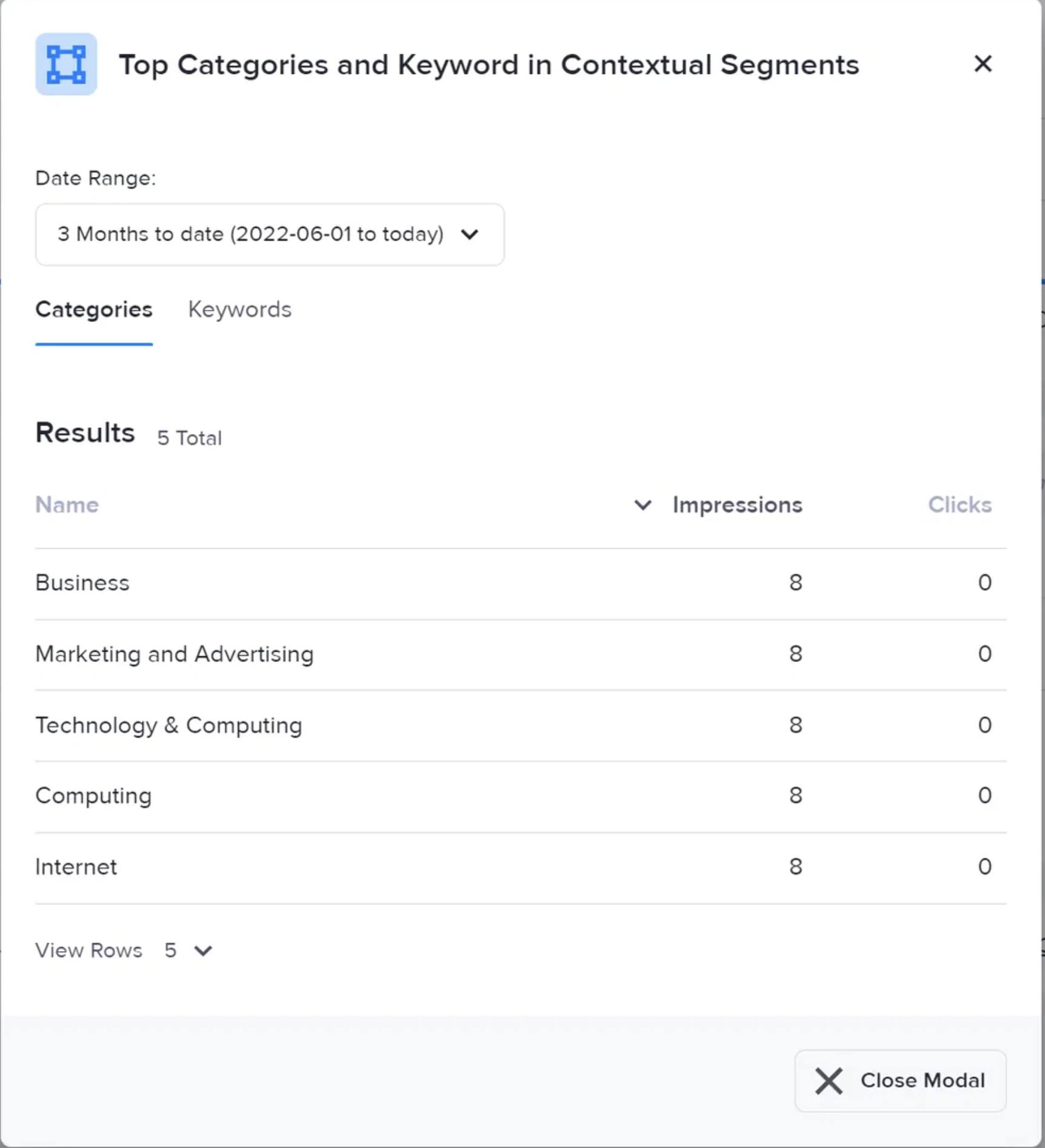
Publishers categorize their content (e.g. Automotive, Finance, Health). Advertisers target or exclude those categories based on brand fit, relevance, and safety.
Keywords add a second layer of precision—especially when paired with semantic analysis rather than literal keyword matching.
This is where modern contextual systems separate themselves from older, brittle approaches.
Where AdButler Fits In
Contextual targeting is only as effective as the infrastructure behind it.
AdButler isn’t just an ad server—it’s a control layer that allows both publishers and advertisers to activate contextual strategies on their own terms.
For Publishers: Turn Content Into Addressable Inventory
With AdButler, publishers can:
- Organize inventory by contextual categories and page‑level signals
- Create high‑value placements tied directly to content themes
- Offer contextual segments to advertisers directly (not just through open exchanges)
- Maintain ownership of first‑party contextual data
- Set pricing that reflects true content value—not commodity CPMs
Instead of selling "traffic," publishers sell intent.
And because contextual data is first‑party by nature, it’s durable and future‑proof.
For Advertisers: Precision Without Identity
Advertisers using AdButler gain:
- Full control over where ads appear
- The ability to align creative with real‑time content environments
- Stronger brand safety through transparent placement logic
- Cleaner measurement, free from noisy identity graphs
You’re not guessing who someone might be. You’re meeting them where their attention already is.
Contextual Targeting in the Real World
A few real-world examples show why contextual targeting works so well.
- SEMrush on Search Engine Land: An SEO tool appearing on a leading digital marketing publication reaches readers already thinking about search, rankings, and optimization.

- Sour Patch Kids on a running shoe review blog: Gummies and a triathlon promotion appear alongside endurance content, tapping into an athlete’s mid-run fueling mindset.

- MSI on Newegg product pages: A gaming laptop ad placed next to product listings feels closer to native content than display—reinforcing intent at the point of consideration.

In each case, the ad aligns with the content, the mindset is already set, and relevance does the heavy lifting.
Why Contextual Ads Perform Better
When ads align with content, several things happen naturally:
- Better user experience: Ads feel complementary to content, reducing disruption, ad fatigue, and improving recall.
- Higher engagement and purchase intent: Contextually relevant ads reach users at the right moment, when interest and intent are already high.
- Stronger brand safety: Ads appear next to relevant, high-quality content, protecting brand reputation by design.
- Growing revenue opportunities: As contextual budgets increase, publishers can command higher CPMs and advertisers benefit from more efficient spend.
- Privacy-first by default: No user tracking, no third-party cookies, and no dependency on consent frameworks.
- Future-proof for a cookieless web: Contextual targeting remains stable as identity-based signals disappear.
- AI-powered accuracy: Modern contextual systems understand semantics, sentiment, and media formats—not just keywords.
- Simple to implement and scale: Contextual targeting relies on content signals, reducing operational complexity for both advertisers and publishers.
In short, contextual ads work because relevance comes from the moment—not the profile.
The Strategic Shift: From Targeting People to Targeting Moments
The biggest mindset change contextual targeting requires is this:
Stop chasing users. Start respecting moments.
Moments are where intent lives. Moments are where relevance happens. And moments don’t require surveillance.
AdButler enables this shift by giving publishers and advertisers the tools to define, activate, and optimize contextual strategies without relying on walled gardens or third‑party identity solutions.
Context Is the New Currency
As the ecosystem continues to move toward privacy‑first advertising, the winners won’t be those with the most data. They’ll be the ones who understand where their message belongs.
If you’re ready to make ads feel relevant again—without guesswork—AdButler is already built for that future.
FAQs
What is contextual targeting in advertising?
Contextual targeting places ads based on the content of a page or environment rather than the identity or behavior of the user viewing it.
How is contextual targeting different from behavioral targeting?
Behavioral targeting uses user data and past activity, while contextual targeting focuses on the content and context of the current moment.
Why is contextual targeting becoming more important?
It is gaining importance due to privacy regulations, the decline of third-party cookies, and the need for relevance without user tracking.
Does contextual targeting require cookies or personal data?
No, contextual targeting operates without cookies or personal identifiers, making it privacy-compliant by design.
How does modern contextual targeting work?
It uses AI and semantic analysis to understand content topics, sentiment, and structure, enabling more accurate ad matching.
What role do publishers play in contextual targeting?
Publishers structure and categorize their content, creating contextual signals that advertisers can target.
What are contextual categories and taxonomies?
They are standardized systems, like the IAB Content Taxonomy, used to classify content and align targeting between platforms.
Why do contextual ads often perform well?
They reach users during relevant moments of interest, increasing engagement, recall, and likelihood to convert.
Is contextual targeting brand-safe?
Yes, because advertisers can control where ads appear, reducing the risk of being placed next to inappropriate content.
How does AdButler support contextual targeting?
AdButler allows publishers and advertisers to define contextual rules, organize inventory, and control ad placements using first-party signals.
What is the main advantage of contextual targeting in a cookieless world?
It provides reliable, scalable ad targeting without relying on identity-based signals that are declining or restricted.
