
What Is a Restaurant Media Network? Why Restaurant Brands Are Becoming Media Owners
McDonald’s wants to build a billion-dollar advertising business. That gives restaurant brands a reason to look differently at their ordering apps, loyalty programs, and digital screens: these channels could also support a media business.
As Adweek reported, McDonald’s is entering ad sales with McDonald’s Media Network. At its September 23 investor day, the company described a pilot across 450 U.S. company-owned restaurants and an aspiration to build a billion-dollar business across its system over time.
For other restaurant brands, the opportunity starts with assets they already operate. Guests use their apps to order, their kiosks to choose meals, and their loyalty programs to access offers. Those interactions create places where relevant advertisers could reach an audience.
From AdButler’s perspective, the next step is commercial: identify which touchpoints can support advertising, what makes them valuable to buyers, and how to operate the offer without compromising the guest experience.
At a glance: The restaurant media opportunity
Restaurant media networks sell advertising across guest-facing channels, including ordering apps, websites, kiosks, digital screens, and eligible loyalty communications.
Their value comes from audience and context: Meal occasions, location, daypart, menu choices, and permitted customer signals can help make advertising relevant.
Existing digital investments create a starting point: Ordering and loyalty infrastructure can support a new revenue opportunity alongside their original purpose.
Technology makes the offer operational: Restaurant brands need campaign delivery, commercial rules, reporting, and control over how the network develops.
What is a restaurant media network?
A restaurant media network is an advertising business that uses a restaurant brand’s customer-facing channels and, where permitted, first-party data to sell campaigns to advertisers.
A campaign might include a sponsored placement in an ordering app, advertising on connected restaurant screens, or a sponsorship in a loyalty newsletter. The restaurant defines what is available, who can advertise, and how campaigns are delivered and measured.
Restaurants already use these channels to promote meals, seasonal offers, and rewards. A media network adds paid access for outside advertisers through defined placements and packages.
For example, a beverage partner could sponsor a placement promoting a drink available on the menu. A regional entertainment venue could buy a campaign across selected locations. Each would need an appropriate format, approved creative, and a clear explanation of what the buyer receives.
This is part of the broader opportunity covered in AdButler’s Owned Media Network Playbook: businesses with direct customer relationships can develop advertising products around the environments they operate.
Why restaurant brands are becoming media owners
Ordering apps and loyalty programs give restaurants a direct connection to their guests. They can also provide useful context about when people visit, what they buy, and how they engage with the brand.
That creates a potential advertising proposition. A beverage company may value access to guests choosing a meal. A local advertiser may value reach across restaurants in a particular market. A payment partner may see an opportunity in an eligible digital ordering environment.
The restaurant has already invested in many of these touchpoints to improve ordering, retention, and service. Media introduces another way to generate value from that investment, provided advertiser demand and campaign margins justify the additional work.
The McDonald’s announcement makes this opportunity more visible. Other restaurant brands still need to establish their own case: which audience they can offer, which buyers want to reach it, and what it costs to serve those buyers.
Where restaurant advertising can happen
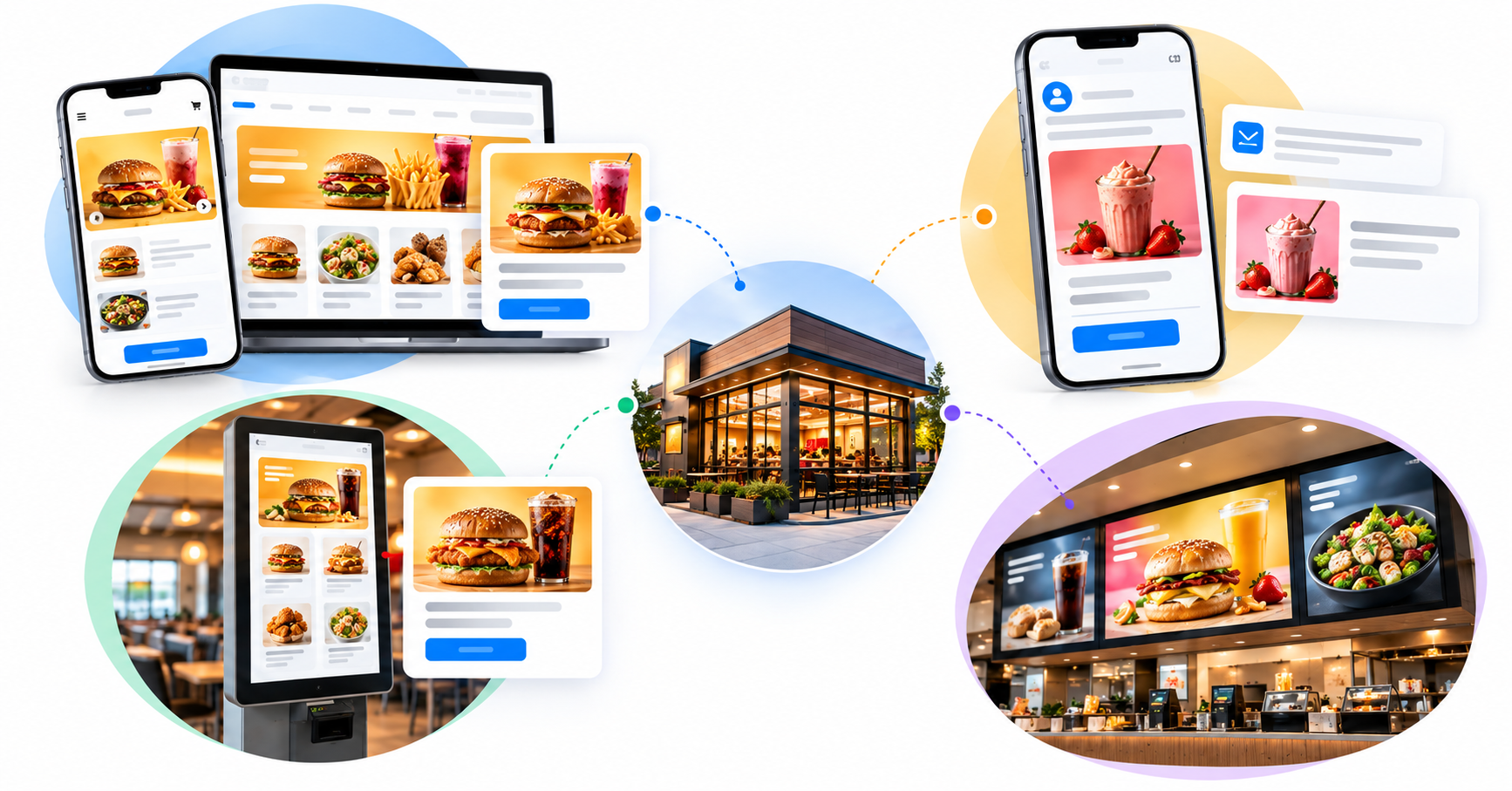
A restaurant media network can span several parts of the guest journey. Each surface offers a different opportunity, and each needs its own placement rules.
Ordering apps and websites
Digital ordering environments can accommodate sponsored banners, featured placements, or partner promotions within an approved layout. Their value comes from reaching guests while they browse and build an order.
A hypothetical beverage sponsorship could appear near a relevant menu category. The placement should remain clearly labeled and preserve access to menu information, customization, and checkout.
Loyalty programs and communications
Eligible loyalty newsletters can support sponsorships or advertising placements alongside the restaurant’s own content. Loyalty programs may also provide approved attributes for audience targeting where their use is permitted.
A recurring breakfast audience, for example, could be relevant to an appropriate partner. Restaurants should distinguish campaigns using customer attributes from contextual campaigns based on signals such as daypart or location.
In-store kiosks
Kiosks bring advertising close to an active purchase decision. A defined placement could introduce a partner promotion at an appropriate point in the ordering session.
Space and timing matter here. Guests need to complete their orders easily, so advertising should fit the task and remain separate from essential controls.
Digital menu boards and connected screens
Menu boards, drive-thru displays, and other connected restaurant screens can support campaigns organized by location, time, or restaurant group. A regional advertiser could buy selected markets, while a national partner could sponsor an agreed set of participating locations.
Commercial availability depends on screen layouts, signage integrations, and operating rights. Measurement also differs from digital ordering: playback records can confirm that creative ran, but they do not establish that an individual guest viewed it or purchased.
What makes these placements valuable to advertisers?
The strongest offer combines a defined audience with a relevant moment.
Restaurant environments provide context through location, meal occasion, daypart, and menu category. Where permitted, loyalty attributes can add information about preferences or visit frequency.
Consider a hypothetical lunch campaign for a beverage available on the menu. A package might combine an ordering-app placement with approved screen inventory at selected restaurants. The buyer would receive defined delivery during a relevant occasion, with reporting appropriate to each channel.
Existing food and beverage partners are reasonable prospects because they already have a commercial relationship with the restaurant. Complementary local or regional advertisers may also be suitable, subject to brand rules and existing agreements.
The restaurant’s job is to turn that relevance into a clear product: where the campaign runs, whom it can reach, what it costs, and how results will be explained.
Turning restaurant assets into a media business
Having an app and connected screens provides a starting point. Building a media business requires sellable inventory, advertiser relationships, delivery workflows, and a practical way to evaluate performance.
A manageable first offer might involve one partner, one market, and one or two surfaces. Establish placement rights, pricing, creative approvals, and reporting before expanding.
In franchise systems, participating operators also need clarity on control, costs, and revenue allocation.
The technology should support that commercial model. Commerce Catalyst brings AdButler’s enterprise ad tech infrastructure into a platform designed for media networks, with capabilities for inventory, campaign operations, and self-service.
Restaurant deployments require defined integrations with the relevant ordering, loyalty, signage, and reporting systems.
Channel-specific capabilities, such as AdButler’s Mobile Ad Server, can support placements within a restaurant app. As packages become repeatable, a branded Self-Serve Portal can give approved partners a direct buying workflow.
Our view is that restaurant brands should retain control over how this business develops: which placements they sell, how they price them, which data enters campaign decisions, and how advertisers participate.
Start with the opportunity your guests and partners make possible
McDonald’s has brought restaurant media into the spotlight. For other brands, the opportunity starts with the guest touchpoints and partner relationships they already have.
Start with a placement that fits the guest experience, a partner with a clear advertising goal, and a campaign your team can confidently deliver. Build from there as you learn what advertisers value, what brings them back, and what generates a worthwhile return.
Your app, loyalty program, and restaurant screens could become the foundation of a new revenue channel. Let’s explore what a restaurant media network could look like for your brand.
FAQs
How is restaurant media different from retail media?
Restaurant media applies the media network model to restaurant environments. Its inventory reflects meal occasions, menu choices, ordering channels, and restaurant locations.
Who advertises on restaurant media networks?
Potential buyers include food and beverage partners, payment and delivery brands, and relevant local or regional businesses. Suitability depends on the audience, placement, brand rules, and existing commercial agreements.
Does a restaurant media network require loyalty data?
No. Campaigns can use contextual signals such as location, daypart, or menu category. Approved loyalty attributes can support additional targeting where their use is permitted.
Can smaller restaurant chains build a media network?
Potentially. A focused regional audience can be commercially useful, but viability depends on advertiser demand, available inventory, operating costs, and the ability to deliver campaigns buyers want to renew.
Can restaurant advertising be measured against orders?
Where campaign events and transaction data can be appropriately connected, reporting can associate eligible orders with advertising activity. The method and its limitations should be disclosed; attributed orders alone do not prove incremental sales.
