
Journey-Based Targeting: How Airlines Deliver More Relevant Advertising
Key Takeaways
- Airline advertising performs best when campaigns are based on traveler intent rather than broad demographics.
- Journey-based targeting uses signals like destinations, loyalty status, booking windows, and trip itineraries to deliver relevant offers.
- Different traveler types require different advertising strategies and partner campaigns.
- Context and timing increase campaign performance while improving the traveler experience.
- AdButler enables airlines to activate journey signals across websites, booking flows, mobile apps, and email.
The Best Airline Advertising Doesn't Feel Like Advertising
Imagine two travelers.
One is flying from Seattle to Tampa for a family vacation.
The other is flying from New York to Chicago for a one-day business meeting.
Showing both travelers the same advertisement makes little sense.
They have different destinations.
Different goals. Different purchasing needs. Different timelines.
Yet many advertising platforms still rely on broad audience segments rather than understanding where travelers are in their journey.
That's where journey-based targeting changes everything.
Instead of asking, "Who is this traveler?"
Airlines can ask,
"What does this traveler need right now?"
That shift creates more relevant advertising, better customer experiences, and stronger commercial outcomes for airline partners.
What Is Journey-Based Targeting?
Journey-based targeting uses real-time traveler signals to determine which advertisements are most relevant at each stage of the travel experience.
Instead of serving the same campaign to every traveler, airlines can personalize offers based on where someone is going, when they're traveling, and what they've already booked.
These signals already exist throughout the booking journey.
The opportunity is activating them intelligently.
The Signals Airlines Already Have
Airlines don't need third-party cookies to understand traveler intent.
They already collect valuable first-party signals throughout the customer journey.
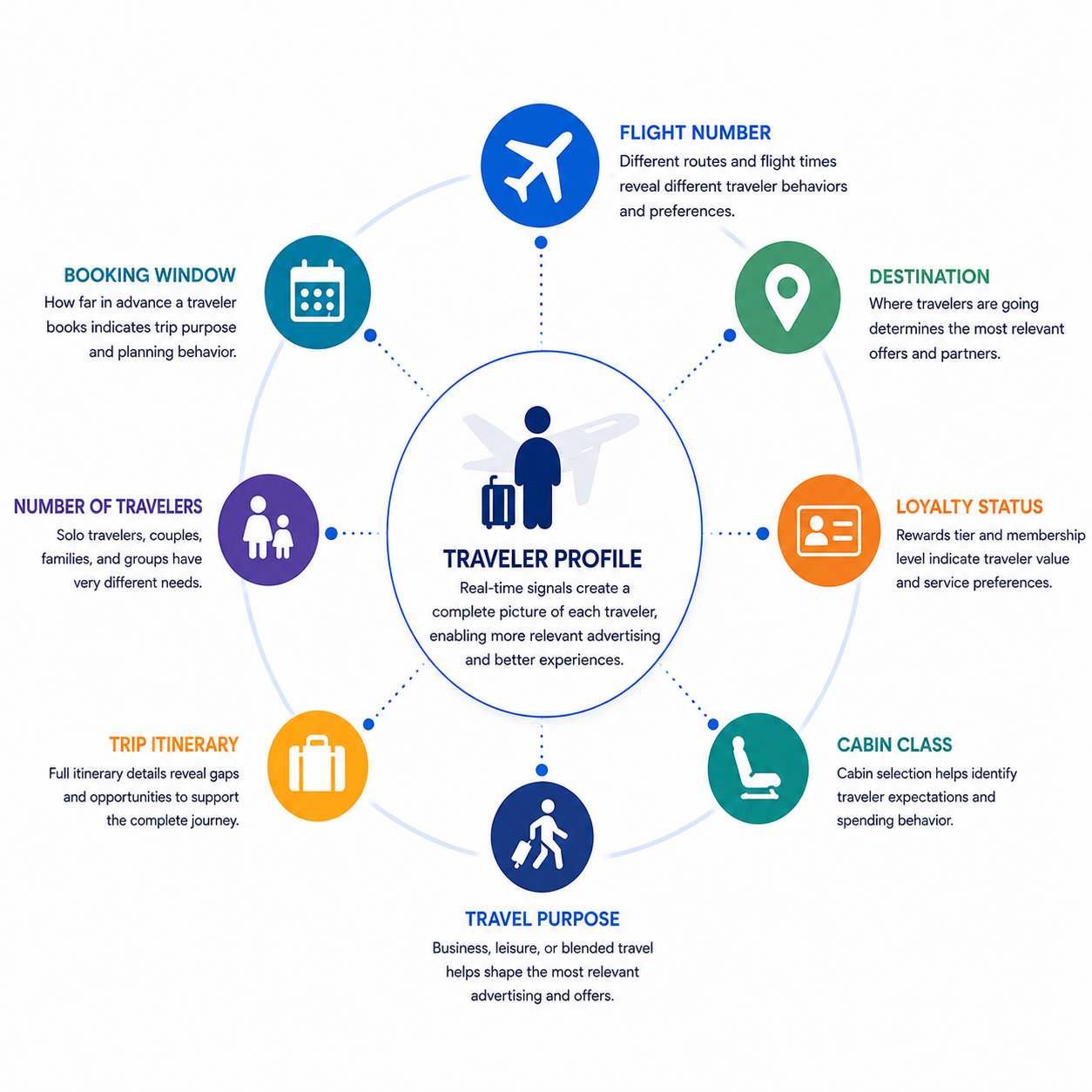
Flight Number
Different flights often represent different traveler behaviors.
A weekday morning route between financial centers may attract business travelers.
A weekend flight to a beach destination is more likely to attract leisure travelers.
Flight number targeting allows airlines to align campaigns with those travel patterns.
Destination
One of the strongest purchase-intent signals available.
A traveler flying to Orlando may be interested in:
- Theme parks
- Family hotels
- Rental cars
- Airport transfers
Someone flying to Las Vegas may respond better to:
- Entertainment
- Premium hotels
- Dining
- Nightlife experiences
The destination determines the most relevant commercial partners.
Booking Window
Someone booking six months in advance behaves differently from someone booking the night before departure.
Early planners may still need:
- Hotels
- Vacation packages
- Attractions
Last-minute travelers often value:
- Airport parking
- Lounge access
- Fast Track
- Same-day accommodation
Timing changes everything.
Number of Travelers
A solo traveler.
A couple.
A family of five.
Each represents different purchasing behavior.
Families may respond to resort packages and attraction tickets.
Solo business travelers are more likely to engage with premium services and airport lounges.
Loyalty Status
Frequent flyers often value convenience over discounts.
Gold and Platinum members may respond to:
- Premium credit cards
- Lounge access
- Chauffeur services
- Business hotels
Occasional travelers may be more interested in savings-oriented offers.
Trip Itinerary
The itinerary often reveals opportunities beyond the flight itself.
Has the traveler booked accommodation?
Do they need a rental car?
Are airport transfers still missing?
Those gaps create valuable partnership opportunities.
Context Creates Better Advertising
Successful airline media isn't about showing more ads.
It's about showing better ads.
Imagine these scenarios.
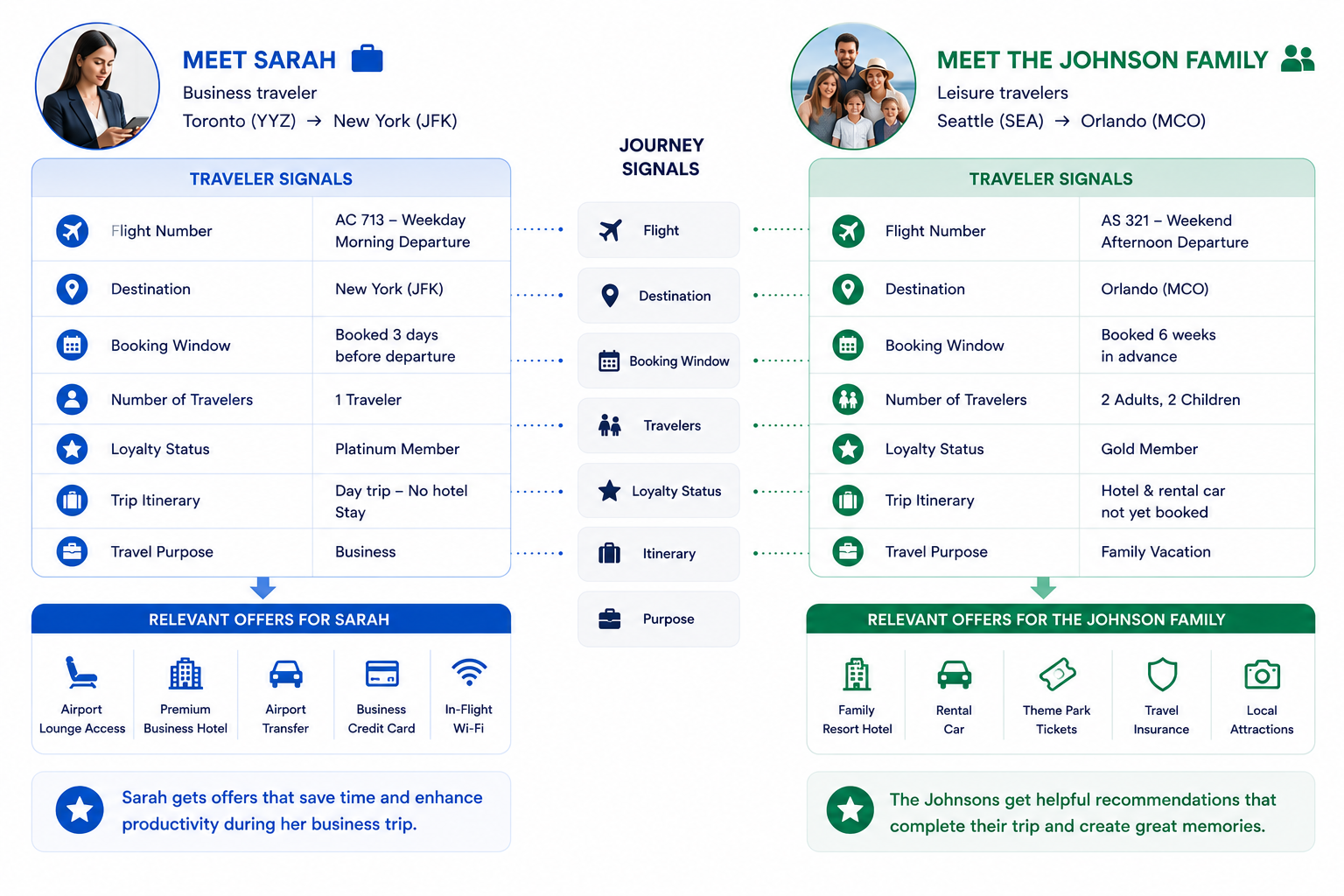
Business Traveler
Sarah is flying from Toronto to New York.
She booked three days before departure.
She's a Platinum Rewards member.
Instead of promoting family attractions, the airline serves:
- Airport lounge access
- Premium business hotel
- Airport transfer
- Rewards credit card
Everything is relevant to her trip.
Family Vacation
The Johnson family is flying to Queensland for the school holidays.
The airline recommends:
- Family resorts
- Theme parks
- Rental cars
- Attraction passes
Rather than interrupting the journey, these recommendations help complete it.
Last-Minute Traveler
Alex books his flight less than 24 hours before departure.
His priorities are speed and convenience.
The airline surfaces:
- Airport parking
- Fast Track security
- Lounge upgrades
- Same-day hotels
Different traveler.
Different journey.
Different advertising.
Why Journey-Based Targeting Works
Journey-based targeting benefits everyone involved.
Travelers
Receive offers that genuinely help them complete their trip.
Advertisers
Reach high-intent audiences at the exact moment purchasing decisions are being made.
Airlines
Create premium advertising products while improving the traveler experience.
When advertising becomes useful instead of disruptive, everyone wins.
Journey-Based Targeting Across the Traveler Experience
Journey signals evolve throughout the customer lifecycle.
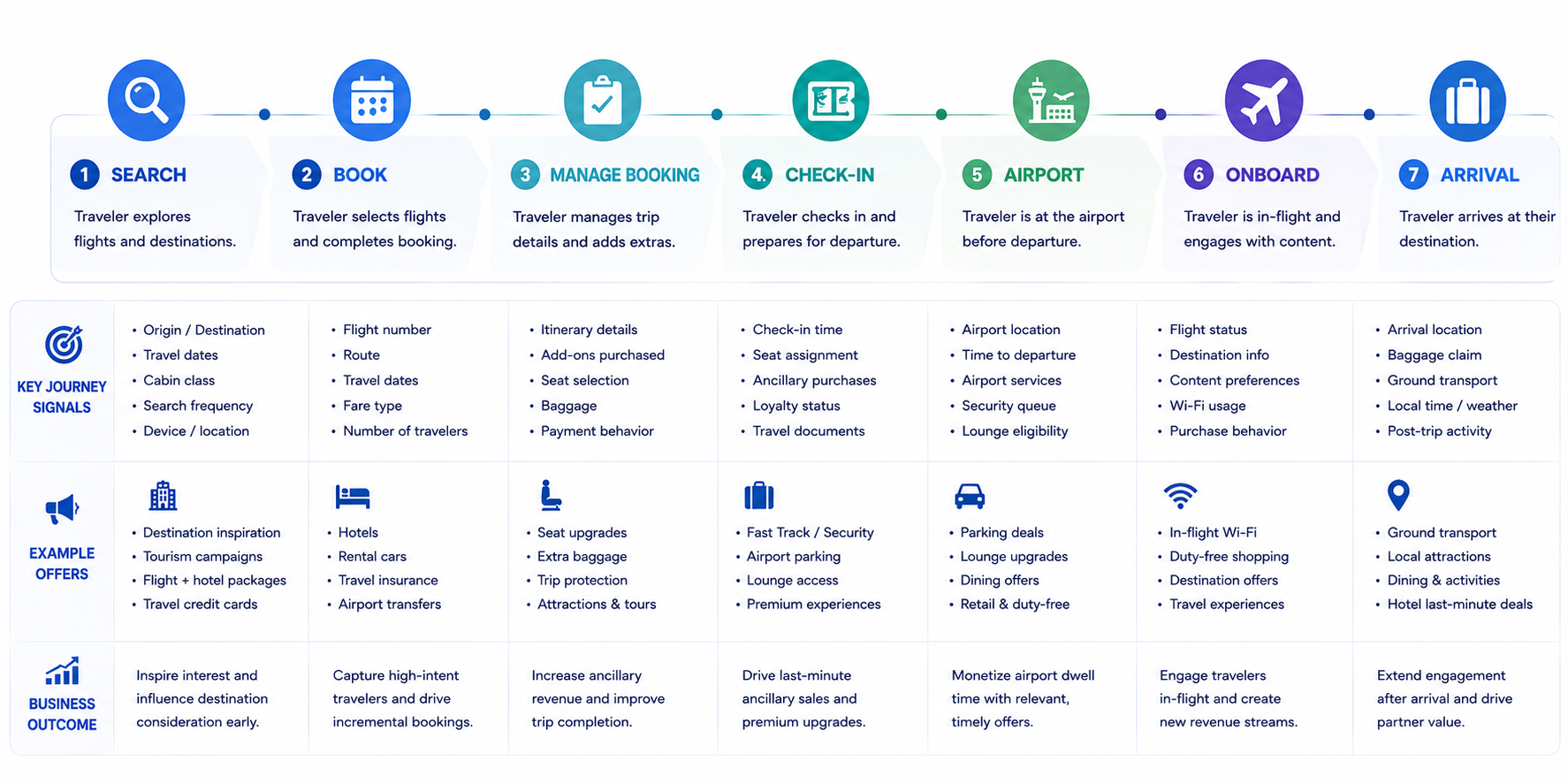
Every stage creates a new opportunity to deliver value.
How AdButler Activates Journey Signals
Understanding traveler intent is only part of the equation.
Airlines also need a platform capable of activating those signals across multiple channels.
With AdButler, airlines can:
- Build audience segments using traveler signals
- Deliver campaigns across websites, booking journeys, mobile apps, and email
- Package premium advertising products for commercial partners
- Promote airline-owned services alongside partner campaigns
- Measure campaign performance from a single platform
Rather than treating every traveler the same, airlines can deliver campaigns that reflect where each customer is in their journey.
The Future of Airline Advertising Is Context
Traditional advertising starts with the placement.
Journey-based advertising starts with the traveler.
The airlines that understand this difference will create stronger customer experiences, more valuable commercial partnerships, and new revenue opportunities that extend well beyond the flight itself.
The question is no longer whether airlines have valuable advertising inventory.
It's whether they're using the traveler journey to unlock its full potential.
Our Airline Media Monetization Executive Guide explores real traveler scenarios, advertising products, journey-based targeting strategies, and practical frameworks for building a scalable airline media business.
Discover how every traveler touchpoint can become a revenue opportunity.
FAQs
What is journey-based targeting?
Journey-based targeting delivers advertising based on where a traveler is in their travel experience, using signals such as destinations, booking behavior, loyalty status, and trip itineraries.
Why is journey-based targeting valuable for airlines?
It helps airlines deliver more relevant advertising, improve traveler experiences, and create premium sponsorship opportunities for commercial partners.
What traveler signals can airlines use?
Common signals include flight number, destination, travel dates, booking window, loyalty status, passenger count, itinerary details, and previous travel behavior.
What types of advertisers benefit from journey-based targeting?
Hotels, rental car companies, tourism boards, airport parking providers, financial institutions, travel insurers, airport lounges, restaurants, and destination attractions all benefit from reaching travelers at high-intent moments.
How does AdButler support journey-based targeting?
AdButler enables airlines to activate traveler signals across websites, booking journeys, mobile apps, email, and other owned digital channels, helping deliver personalized campaigns while managing reporting and advertiser relationships from one platform.
